 Hammer Strength
In the realm of strength training equipment, few brands command the respect and recognition that Hammer Strength has earned over its decades of innovation and manufacturing excellence. As a subsidiary of Life Fitness, one of the world’s leading fitness equipment manufacturers, Hammer Strength has established itself as the gold standard for serious athletes, professional gyms, and discerning home fitness enthusiasts. The brand’s commitment to biomechanically sound design, exceptional durability, and user-centric engineering has made it a fixture in elite training facilities worldwide, from Olympic training centers to professional sports team facilities.
The squat rack stands as one of the most fundamental and indispensable pieces of equipment in any serious strength training program. Often referred to as the cornerstone of functional fitness, a quality squat rack enables users to safely perform compound movements that engage multiple muscle groups simultaneously, building not just strength but also coordination, stability, and athletic performance. The squat rack’s versatility extends far beyond its namesake exercise, serving as a platform for bench pressing, overhead pressing, pull-ups, and countless other movements that form the foundation of comprehensive strength development.
Hammer Strength squat racks occupy a unique position in the market, bridging the gap between commercial-grade durability and thoughtful design accessibility. These racks are engineered specifically for high-volume use in demanding commercial environments, yet their intuitive adjustability and user-friendly features make them equally suitable for home gym installations where space and versatility are paramount. The target user base spans from competitive powerlifters and Olympic weightlifters seeking equipment that can withstand maximal loading, to CrossFit athletes requiring versatile training platforms, to everyday fitness enthusiasts who refuse to compromise on quality and safety. Physical therapists and rehabilitation specialists also frequently specify Hammer Strength equipment for clinical settings, recognizing the brand’s emphasis on safe, controlled movement patterns.
Hammer Strength Power Rack Collection
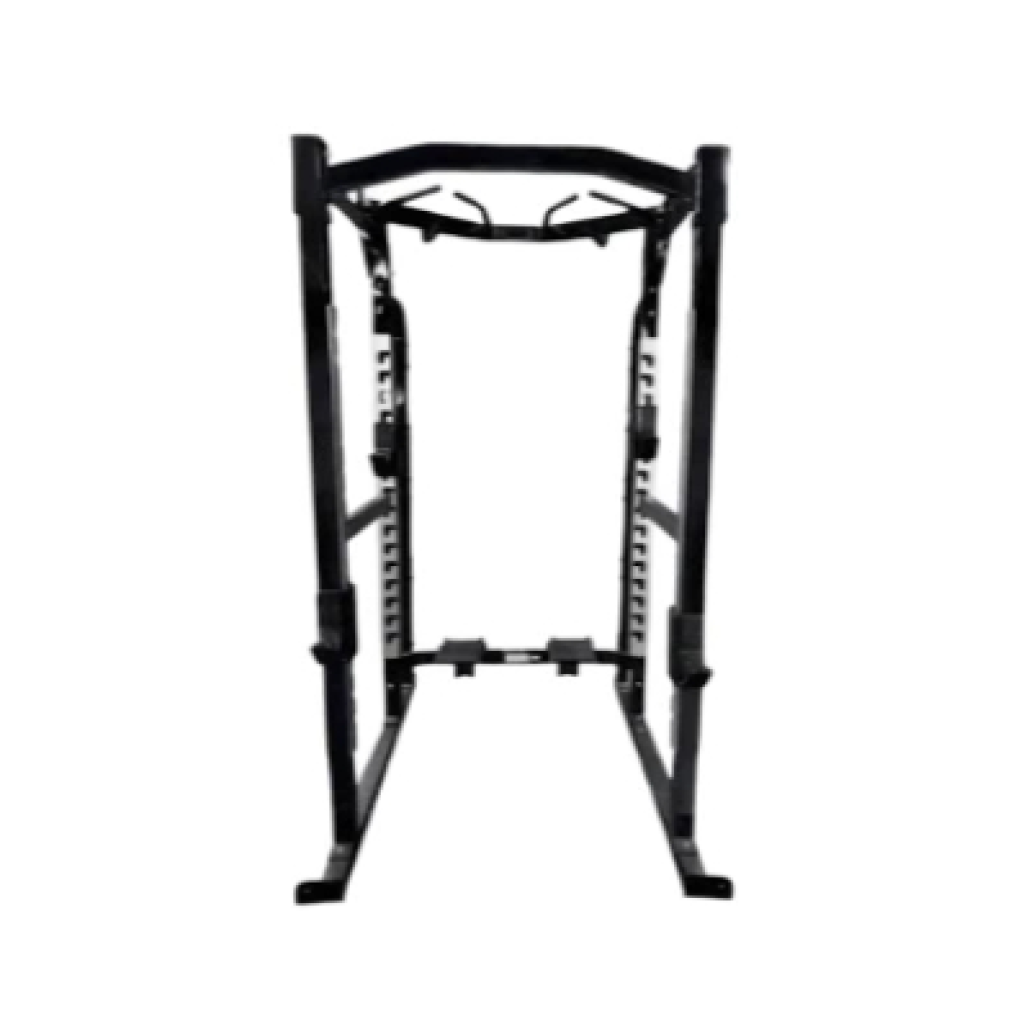
Hammer Strength Power Full Cage / Squat Rack (Remanufactured)
Price: $4,099.00
Description:
The Hammer Strength Power Full Cage / Squat Rack (Remanufactured) is a powerhouse designed for serious strength training. Built with heavy-duty steel and precision engineering, this full cage setup offers unmatched stability and safety during every lift. Weighing 884 lbs (402 kg), it anchors firmly to the floor, ensuring zero movement during explosive strength sessions.
Perfect for powerlifters, athletes, and advanced trainers, this rack combines Hammer Strength’s legacy of performance with renewed craftsmanship. It measures 79.5″ L x 74″ W x 96.5″ H, providing plenty of space for squats, presses, and full-body training.
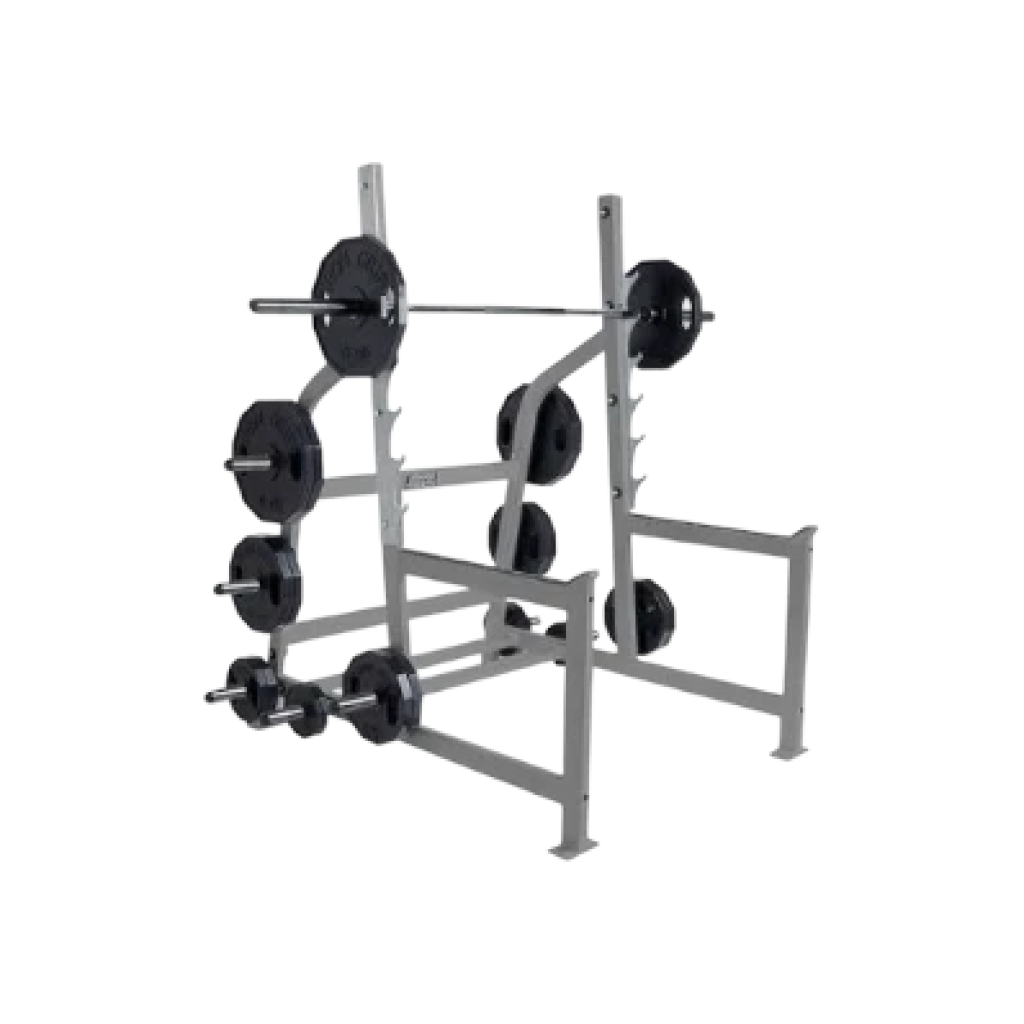
Hammer Strength Olympic Squat Rack
Price: $1,250.00
Description:
The Hammer Strength Olympic Squat Rack is a quintessential piece for any gym, combining compact design with reliable strength. Built from 11-gauge steel, this rack offers maximum structural integrity and resilience under tough daily training. Each frame is coated with a high-quality electrostatic powder finish, ensuring protection against wear and corrosion.
With dimensions of 59″ L x 69″ W x 73″ H and a total weight of 290 lbs (132 kg), it delivers a stable foundation for squats, lunges, and overhead lifts. This rack is built for simplicity, stability, and safety — the essentials of any powerful workout station.
Why Choose a Hammer Strength Squat Rack
For commercial gym operators, the decision to invest in Hammer Strength squat racks represents more than just an equipment purchase—it’s a strategic business decision. Commercial facilities face unique challenges: equipment must withstand thousands of training sessions annually, accommodate users of vastly different sizes and skill levels, and maintain both functionality and appearance despite constant use. Hammer Strength racks excel in these demanding environments, with commercial gym owners consistently reporting minimal downtime, reduced maintenance costs, and member satisfaction that translates directly to retention rates. The equipment’s professional appearance also elevates a facility’s brand perception, signaling to members that the gym is serious about providing premium training experiences. Many successful gym franchises have built their reputations in part on their commitment to outfitting their facilities exclusively with Hammer Strength equipment.
For the growing home gym market, Hammer Strength represents the ultimate solution for serious training enthusiasts who want commercial-grade performance in a residential setting. While numerous budget options exist for home squat racks, these typically compromise on stability, weight capacity, or longevity—compromises that become apparent and potentially dangerous as users advance in their training. A Hammer Strength rack, by contrast, provides the same robust platform used by professional athletes, ensuring that your equipment will never become a limiting factor in your training progression. Home gym enthusiasts particularly appreciate that these racks maintain their value exceptionally well; quality strength equipment is often passed down through generations or resold at strong prices, unlike cardio equipment that becomes technologically obsolete.
From a financial perspective, the return on investment for Hammer Strength equipment consistently outperforms lower-tier alternatives when analyzed over the equipment’s functional lifespan. While the initial capital outlay exceeds budget options by fifty to one hundred percent, the practical lifespan of a Hammer Strength rack often exceeds fifteen to twenty years in commercial settings, compared to three to five years for economy brands. This translates to a significantly lower total cost of ownership when accounting for replacement cycles, maintenance expenses, and the hidden costs of equipment-related member injuries or dissatisfaction. Commercial facilities also benefit from reduced insurance premiums when outfitting with certified, commercial-grade equipment, and the enhanced member experience drives revenue through improved retention and word-of-mouth marketing.
Core Product Features
Structural Design and Engineering
The foundation of any Hammer Strength squat rack is its heavy-gauge steel frame construction, typically utilizing 11-gauge (3mm) or 7-gauge (4.5mm) steel tubing depending on the specific model. This isn’t the thin-walled tubing found in residential-grade equipment; Hammer Strength employs cold-rolled steel with consistent wall thickness that provides exceptional rigidity and load distribution. The engineering philosophy prioritizes triangulated bracing and strategic reinforcement at high-stress junction points, creating a frame that can absorb and dissipate forces without flexing, wobbling, or developing the gradual structural fatigue that plagues lesser equipment.
Weight capacity specifications for Hammer Strength squat racks typically range from 1,000 pounds (454 kg) for their more compact models to exceeding 1,500 pounds (680 kg) for their full commercial power racks. These ratings represent conservative engineering margins; the equipment is tested to failure points well beyond stated capacities. Importantly, these weight ratings apply to dynamic loading scenarios, not just static weights. When an athlete performs a heavy squat and re-racks the barbell with force, the equipment momentarily experiences loads significantly exceeding the barbell’s weight. Hammer Strength’s engineering accounts for these impact forces, ensuring safety even when users don’t execute perfect re-racking technique.
Stability in a squat rack derives from multiple design elements working in concert. The base footprint of Hammer Strength racks typically measures 48 to 60 inches deep, creating a low center of gravity that resists tipping even during aggressive pull-up exercises or when weights are loaded on only one side. The uprights are precisely perpendicular to the base with tolerances measured in fractions of a degree, preventing the gradual lean that develops in poorly manufactured equipment. Many models incorporate bolt-down holes, allowing permanent installation for facilities where maximum stability is required, though the weight and footprint of the rack itself provides sufficient stability for most applications without floor anchoring.
The welding throughout Hammer Strength racks represents precision craftsmanship rarely seen in fitness equipment. Full-penetration welds at critical stress points ensure that connections are stronger than the parent material itself. Welds are ground smooth and finished to prevent rust initiation points and provide clean, professional aesthetics. This attention to welding detail contributes significantly to the equipment’s longevity, as weld failures represent one of the primary failure modes in lesser equipment after years of cyclical loading. Hammer Strength backs their welding with frame warranties that typically extend ten years or more, demonstrating confidence in their manufacturing processes.
Safety Features
Safety represents the paramount concern in strength training equipment design, and Hammer Strength approaches this challenge with multiple redundant protection systems. The primary safety mechanism consists of adjustable safety bars or spotter arms that can be positioned at precise heights within the rack. These bars are engineered to catch a dropped or failed lift, preventing the barbell from crushing the athlete. Unlike economy racks where safety bars may bend or fail under load, Hammer Strength safety systems are tested to withstand the full impact of dropped maximum loads repeatedly without permanent deformation.
The J-hook system that holds the barbell demonstrates thoughtful engineering that balances security with ease of use. The hooks feature a protective coating, typically UHMW plastic or rubber, that prevents barbell knurling from being damaged during re-racking while providing sufficient grip to prevent the bar from sliding. The hook design incorporates a slight upward angle and adequate depth to ensure the barbell seats securely even when racked with some lateral movement or imperfect technique. Commercial models often feature numbered height positions corresponding to commonly used settings, allowing users to quickly reproduce their preferred configurations without measurement.
The foundation of the entire system rests on Hammer Strength’s anti-slip foot design. Large rubber feet, often six to eight inches in diameter, provide substantial surface contact with the floor while their high-friction compound prevents sliding even on polished concrete or gym flooring. For permanent installations, the base frame incorporates pre-drilled mounting holes, allowing facilities to bolt the rack directly to the floor using expansion anchors. This permanent mounting eliminates any possibility of rack movement and is particularly important in commercial facilities or for athletes handling truly maximal loads.
Hammer Strength equipment consistently meets or exceeds relevant safety certification standards, including EN957 (European Standard for stationary training equipment) and ASTM F1250 (American Society for Testing and Materials standard for treadmills and other exercise equipment). These certifications require independent testing of structural integrity, stability, and safety mechanisms. For commercial facilities, this certification is often a requirement for liability insurance coverage and provides documentation that the facility exercised due diligence in equipment selection.
Functional Versatility
While named for the squat, a quality rack serves as a versatile training platform for numerous exercises. The primary squat function accommodates all variations: high-bar back squats favored by Olympic weightlifters, low-bar squats preferred by powerlifters for maximum weight, front squats that emphasize quadriceps development, and safety bar squats that reduce shoulder stress. The adjustability range of J-hooks and safety bars allows proper setup for users ranging from five feet to over six and a half feet tall, ensuring optimal biomechanics regardless of individual proportions.
Bench pressing represents another primary use case for squat racks, with many facilities using their racks more frequently for pressing than squatting. The rack allows for safe solo bench pressing by positioning safety bars just below the chest, providing protection if a lifter fails a repetition without a spotter present. The adjustable J-hooks accommodate both flat bench pressing and incline variations, while the stable platform eliminates the wobble and flex common in standalone bench press stations. Advanced lifters particularly value the ability to set safety bars at multiple heights for pin presses and other specialized training techniques.
Many Hammer Strength squat racks incorporate integrated pull-up bars or allow the addition of pull-up attachments, transforming the rack into a complete upper-body training station. Pull-up bars are typically positioned at approximately seven feet height and engineered to support dynamic loading from kipping pull-ups, muscle-ups, and other explosive movements. Multiple grip positions—wide, narrow, neutral—accommodate different training emphases and provide variety to prevent overuse injuries. Some models feature a multi-grip pull-up bar with eight or more hand positions.
Beyond these primary functions, the robust construction of Hammer Strength racks supports countless additional exercises: overhead presses, rack pulls, barbell rows, landmine exercises (with appropriate attachments), suspension training anchor points, resistance band attachments, and specialty bar movements. This versatility means a single piece of equipment can effectively serve as the centerpiece of a complete strength training program, making the rack an exceptionally space-efficient investment for facilities where square footage commands premium value.
Adjustability and Compatibility
The J-hook adjustment system represents one of the most frequently used features on any squat rack, and Hammer Strength designs this system for both precision and ease of use. Most models offer adjustment increments of two to three inches throughout a range of approximately 24 to 72 inches, providing adequate positions for users of all heights performing all standard exercises. The hooks attach via pins, pull-pins, or rotating lever systems that can be operated single-handed, allowing efficient setup changes between users or exercises. The pin holes are laser-cut for precise alignment, ensuring hooks seat securely at the same height on both sides of the rack.
Safety bar adjustment follows similar principles, with positioning increments that allow users to set the catch height just below their lifting range. This precision is crucial; safety bars set too high interrupt the exercise movement pattern, while bars set too low provide inadequate protection. Hammer Strength racks typically offer fifteen to twenty-five safety bar positions, giving users fine-tuned control over this critical safety element. The safety bars themselves extend across the full interior width of the rack, providing protection regardless of where the lifter positions themselves within the rack.
Accommodating users of different heights represents a significant engineering challenge in squat rack design. A setting optimal for a 5’2″ user places the bar far too low for a 6’6″ athlete. Hammer Strength racks address this through their extensive adjustment range and well-distributed positioning increments. Shorter users find adequate J-hook positions for squatting without standing on platforms, while taller athletes can set the hooks high enough to unrack weight without excessive bending or tiptoeing. This universal accommodations proves particularly valuable in commercial settings serving diverse populations.
Barbell compatibility ensures users can employ any standard Olympic barbell (7 feet long with 2-inch diameter sleeves) without issues. The interior width between uprights on Hammer Strength racks typically measures 43 to 49 inches, providing adequate clearance for the barbell while maintaining stability through a compact footprint. Specialty bars including safety squat bars, Swiss bars, football bars, and cambered bars all fit properly within the rack dimensions. The J-hooks are designed with adequate spacing and throat depth to accommodate different collar diameters and barbell manufacturing variations, preventing frustrating compatibility issues.
Technical Specifications Detailed
Dimensional Parameters
The overall external dimensions of Hammer Strength squat racks vary by model, but typical measurements for a standard power rack configuration fall within these ranges: 48 to 52 inches wide, 48 to 60 inches deep, and 82 to 90 inches tall. These dimensions represent the maximum space the equipment occupies including any protruding elements like safety arm extensions or weight plate storage. Understanding these measurements is crucial for facility planning, particularly in spaces with structural columns, low ceilings, or tight equipment layouts.
Internal training space dimensions determine the actual usable area for exercises and represent a more important specification for user experience. The interior width between uprights typically measures 43 to 49 inches, providing adequate space for Olympic barbell movement plus several inches of clearance on each side. Interior depth, measuring from the front uprights to rear crossmembers or back uprights in power rack configurations, ranges from 24 to 48 inches depending on whether the model is a half-rack or full power rack. This depth must accommodate the lifter’s full range of motion during squats plus adequate clearance when in the bottom position.
Recommended floor space allocation extends beyond the equipment’s physical footprint to include necessary clearance for safe operation, barbell loading, and traffic flow. A conservative recommendation for a power rack installation allocates a floor space of approximately 8 feet wide by 10 feet deep, creating a defined training zone. This provides adequate space for barbell plate loading and unloading, allows the athlete to step away from the rack after completing a set, and ensures other facility users can move around the equipment safely. Facilities with very high traffic may allocate even more space to prevent congestion during peak hours.
Ceiling height requirements often prove to be a limiting factor in basement home gyms or converted commercial spaces. A minimum ceiling height of 8 feet allows installation of most Hammer Strength racks, but this leaves minimal clearance for overhead pressing exercises or taller users performing pull-ups. The preferred ceiling height of 9 to 10 feet accommodates all exercises comfortably, allows overhead work for tall athletes, and provides options for adding plate storage accessories that extend above the main frame. Facilities should measure ceiling height accounting for any HVAC ductwork, lighting fixtures, or structural elements that may reduce effective clearance.
Weight and Load Capacity
The equipment’s own weight provides insight into its construction quality and stability. Hammer Strength squat racks typically weigh between 200 and 600 pounds depending on configuration, with half-racks at the lower end and full power racks with extensive attachments at the higher end. This substantial weight contributes to stability, as the equipment’s inertia resists movement during use. For facilities, this weight also has shipping and installation implications; most racks ship on freight pallets and require multiple people for assembly and positioning. Home installations may require careful consideration of upper-floor weight limits, though the distributed footprint prevents concentrated loading issues.
Maximum weight capacity ratings distinguish professional from consumer equipment, and Hammer Strength specifications reflect their commercial pedigree. As mentioned previously, static weight capacity typically ranges from 1,000 to 1,500+ pounds across different models. However, users should understand that dynamic loading during exercise can temporarily double or triple the forces experienced by the equipment structure. When a 500-pound squat is re-racked with force, impact loading might momentarily subject the J-hooks and uprights to 1,000 or 1,500 pounds of force. Hammer Strength’s conservative ratings account for these dynamics, providing safety margins that protect even during imperfect technique.
Load distribution varies across different components of the rack structure. The main uprights bear the primary vertical loads and are engineered with the highest capacity. The J-hooks, which support the loaded barbell during racking and unracking, must withstand both vertical loads and lateral forces as the bar is lifted from or returned to the hooks. Safety bars experience potentially the most extreme loading—sudden impact loading when catching a failed lift—and are engineered accordingly with heavier gauge materials and reinforced mounting systems. Pull-up bars must support dynamic loading that includes the user’s bodyweight plus momentum from kipping or swinging movements, typically rated for 300 to 400 pounds to accommodate both user weight and dynamic forces.
Materials and Coatings
The steel grade and thickness form the foundation of equipment longevity and performance. Hammer Strength typically employs cold-rolled steel rated at 50,000 to 70,000 PSI tensile strength. Cold rolling produces steel with tighter dimensional tolerances, smoother surfaces, and better mechanical properties than hot-rolled alternatives. The wall thickness of 11-gauge (approximately 3mm) or 7-gauge (approximately 4.5mm) tubing provides exceptional rigidity; when you grasp an upright and attempt to flex it, there is virtually no perceptible movement. This rigidity ensures the rack doesn’t flex or sway during use, maintaining precise alignment of J-hooks and safety mechanisms.
Surface treatment begins with proper metal preparation: shot blasting or chemical treatment removes mill scale and contaminants, creating an ideal surface for coating adhesion. Hammer Strength then applies powder coating, a superior finish compared to wet paint. The powder coating process electrostatically applies dry powder particles that are then cured under heat, creating a tough, uniform coating that bonds chemically to the steel. This coating resists chipping, scratching, and UV degradation far better than traditional paint. The typical coating thickness of 2 to 4 mils provides excellent protection while maintaining clean aesthetic lines without runs or drips.
Corrosion protection proves critical for equipment longevity, particularly in humid environments or facilities where sweat exposure is constant. Beyond the powder coating, Hammer Strength often treats the steel with corrosion-inhibiting primer before finish coating application. Frame designs minimize moisture traps—areas where water can accumulate—and drain holes are incorporated where appropriate. Stainless steel hardware resists corrosion far better than standard steel bolts, adding longevity and maintaining appearance. Despite these protections, proper maintenance remains important; facilities should promptly clean chemical residues from sweat or cleaning products and touch up any coating damage that exposes bare steel.
Color options for Hammer Strength equipment typically include classic black, platinum (light grey), and various accent colors for trim elements. Black remains the most popular choice, providing a professional appearance that matches most facility aesthetics and shows minimal wear over time. The platinum option offers a distinctive look and can help brighten spaces with limited natural light. Some commercial customers opt for custom colors to match their facility branding, though this typically requires minimum order quantities and extended lead times. The powder coating process allows for virtually any color selection, limited only by practical and business considerations.
Accessories and Attachments
Standard configurations typically include the essential components: main frame structure, adjustable J-hooks (usually two pairs), adjustable safety bars or spotter arms, pull-up bar (on most models), and mounting hardware. Some models include basic weight plate storage—vertical posts that accept Olympic plates—integrated into the frame structure. The package usually includes assembly instructions, hardware for installation, and documentation on proper use and maintenance. Higher-end commercial models may include additional features like numbered height markers, band peg attachments, or landmine post receivers as standard equipment.
Optional accessories expand the rack’s training possibilities significantly. Dip attachments convert the rack into a dip station for tricep and chest work. Landmine attachments enable rotational core exercises and single-arm pressing variations. Resistance band pegs provide anchor points for accommodating resistance training, allowing athletes to add band tension that increases through the range of motion. Plate-loaded lat pulldown and low-row attachments transform the rack into a cable station for pull training. Multi-grip pull-up bars with eight or more grip positions provide variation for pull-up training. Weight storage trees keep plates organized and easily accessible within arm’s reach of the lifting platform.
Third-party compatibility represents an important consideration for users who want maximum flexibility in configuring their setup. Hammer Strength racks generally use standard hole spacing (typically 1-inch or 2-inch increments) that matches industry norms, allowing attachment of accessories from other manufacturers. Westside hole spacing—a standard popularized by Westside Barbell—uses 1-inch spacing in the bench press zone and 2-inch spacing elsewhere, and many Hammer Strength models adopt this pattern. Standard Olympic barbell dimensions ensure any quality barbell works with the rack. Users should verify specific compatibility before purchasing third-party accessories, particularly specialized items like monolift attachments or lever arms, as mounting patterns may vary.
Product Line and Model Comparison
Different Model Features
Entry-level models in the Hammer Strength line typically take the form of half-racks or squat stands designed for space-efficient installations. These models sacrifice some features—perhaps only offering front-mounted safety arms rather than full enclosed safety bars, or having more limited pull-up bar options—but maintain the brand’s commitment to robust construction and reliability. Weight capacities may be rated at the lower end of the range (1,000 pounds rather than 1,500+), which still exceeds the needs of 95% of users. These models suit home gyms, personal training studios, or commercial facilities where space is at a premium and maximum loading isn’t a daily occurrence.
Professional-grade models represent the middle tier, offering enhanced features while remaining accessible to serious home gym owners and boutique fitness facilities. These typically include full power rack construction with four uprights creating an enclosed safety cage, more extensive adjustment options with closer hole spacing through the bench press zone, integrated plate storage, and higher weight ratings. The pull-up bar often features multiple grip positions, and the frame may incorporate additional attachment points for accessories. Professional models balance the full feature set users want with a price point that doesn’t require commercial budgets.
Commercial-grade models represent the pinnacle of Hammer Strength’s power rack line, built for the most demanding high-volume environments. These racks feature the heaviest gauge steel, the most extensive adjustment options, premium hardware throughout, and often include features like numbered height indicators on the uprights for quick setup, protective padding on high-contact areas, and integrated accessory attachment points throughout the frame. Weight capacities often exceed 1,500 pounds, providing ample safety margin even for elite-level athletes. The aesthetic finish and attention to detail on commercial models projects the premium image important to upscale fitness facilities.
Model Selection Guide
Home gym users should carefully evaluate their space, budget, and training style when selecting a model. A serious powerlifter training alone will prioritize maximum weight capacity, robust safety systems, and stability for handling heavy weights without spotters. This user would likely prefer a full power rack with enclosed safety bars, even if it consumes more floor space. Conversely, an athlete focusing on Olympic lifting or CrossFit-style training might prefer a half-rack that provides easier barbell access and more freedom of movement for dynamic lifts. Space constraints in basement home gyms often make half-racks the practical choice, as they provide most essential functions in a smaller footprint.
Small studio and garage gym operators face different considerations. Their equipment must be commercial-grade to withstand daily use by multiple clients, yet they can’t justify the capital expense of full commercial pricing. Professional-grade models typically serve these operations perfectly, providing commercial durability at more accessible price points. These facilities benefit from versatile equipment that supports varied training styles, as their clients may range from general fitness members to competitive athletes. Integrated accessory options like dip attachments and band pegs add value by reducing the need for separate specialized equipment.
Large commercial fitness facilities demand the ultimate in durability, safety, and ease of maintenance. Top-tier commercial models justify their premium pricing through extended component life, reduced downtime, enhanced safety features that reduce liability exposure, and professional appearance that supports the facility’s brand positioning. Large facilities may also prefer specific features like numbered height indicators that allow staff to quickly set up equipment for group training classes, or integrated plate storage that keeps the area organized during peak traffic hours. The ability to customize colors to match facility branding may also factor into commercial decisions.
Budget considerations should account for total cost of ownership rather than purchase price alone. An entry-level model might cost 60% of a commercial model’s price, but if it requires replacement in five years versus fifteen years of service from the commercial unit, the commercial model represents better value. Similarly, users should consider whether they’ll need to purchase additional accessories to achieve desired functionality; a model with integrated features may cost more initially but less than buying a basic model plus add-on attachments. Financing and leasing options often make commercial-grade equipment more accessible to facilities than outright purchase of lesser equipment.
Usage Scenarios and Training Applications
Primary Training Movements
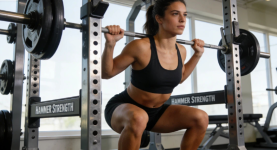
The barbell back squat represents the rack’s namesake exercise and remains the primary movement for most strength athletes. High-bar positioning, with the barbell resting on the trapezius muscles, emphasizes quadriceps development and maintains a more upright torso position, favored by Olympic weightlifters and bodybuilders. Low-bar positioning, with the barbell resting on the posterior deltoids, allows handling heavier loads by leveraging more posterior chain musculature and is preferred by powerlifters. The rack’s adjustable J-hooks must accommodate both positions comfortably, typically requiring two or three different height settings for the same user performing different squat styles.
Front squats challenge the anterior core and quadriceps more intensely than back squats while reducing spinal compression forces. The awkward bar position—held across the front deltoids with either a clean grip or crossed-arm position—makes safety equipment crucial, as failing a heavy front squat requires dropping the weight forward. Properly adjusted safety bars positioned just below the bottom squat position protect the lifter while allowing full range of motion. Many athletes alternate between front and back squats within their training cycles to provide varied stimulus while managing cumulative fatigue.
Bulgarian split squats or rear-foot-elevated split squats provide unilateral training that addresses strength imbalances and challenges stability. Using the rack for these movements requires setting the J-hooks at an appropriate height to unrack the weight comfortably before stepping into position, then stepping forward sufficiently to clear the rack during the movement. The rack’s stable platform proves valuable here, as less substantial equipment may wobble during the unracking process with compromised balance from the split stance.
Bench pressing within the rack offers critical safety advantages over traditional bench press stations, particularly for athletes training without spotters. Safety bars are adjusted to a height just below the chest, catching the barbell if the lifter fails a repetition. This allows maximum effort training without the fear of being pinned under a failed lift. Pin presses—beginning each repetition with the bar resting on safety bars rather than lowering from lockout—serve as a specialized training technique for developing explosive power and overcoming sticking points in the bench press movement.
Overhead pressing movements including strict press, push press, and push jerk all benefit from the rack’s stable platform. The barbell begins on J-hooks set at upper chest height, allowing the athlete to step under the bar and unrack with proper positioning. The overhead space within and above the rack must provide adequate clearance for the athlete plus barbell at full extension, making ceiling height a crucial consideration. Some athletes prefer performing overhead work just in front of the rack rather than inside it, which requires ensuring adequate clearance for the barbell to travel overhead without striking the frame structure.
Suitable User Demographics
Powerlifters find Hammer Strength racks ideal for their specific training demands. The sport of powerlifting revolves around three lifts—squat, bench press, and deadlift—and the rack serves as the primary training platform for two of these. Powerlifters require absolute stability when handling maximal loads, adjustment precision for finding optimal positioning, and robust safety systems for training alone. The heavy-duty construction withstands years of heavy daily training without degradation, while the weight capacity provides adequate safety margin for lifters handling 800+ pound squats or 600+ pound bench presses.
Bodybuilders and physique athletes utilize the rack differently than powerlifters, typically working with moderate loads for higher repetition ranges to maximize muscle hypertrophy. These athletes value variety in their training, frequently incorporating different squat variations, tempo work, pause reps, and other techniques that challenge muscles through different stimuli. The rack’s versatility in supporting dozens of different exercises allows bodybuilders to construct diverse training routines without requiring numerous pieces of specialized equipment. The robust safety systems enable training to muscular failure safely, an important technique in hypertrophy training.
Functional fitness athletes including CrossFit competitors require equipment that supports dynamic, often ballistic movements. These athletes might perform heavy front squats, then transition immediately to pull-ups, then use the rack for barbell complexes or other conditioning work. The rack must withstand not just static loading but impact forces from aggressive bar re-racking and dynamic pull-up variations. Hammer Strength’s commercial construction tolerates this demanding use pattern, while the versatile design supports the varied movements central to functional fitness programming.
Physical therapy and rehabilitation applications represent a growing use case for quality strength equipment. Clinicians recognize that progressive resistance training plays a crucial role in recovering from many injuries and surgeries. The rack’s adjustable safety systems allow therapists to ensure patient safety during exercises, while the smooth adjustment mechanisms enable precise progression matching the patient’s recovery trajectory. The stable platform reduces patient anxiety about equipment failing, important for building confidence during rehabilitation. Many orthopedic and sports medicine clinics now incorporate strength training equipment into their treatment spaces.
The equipment accommodates users across the full skill spectrum from complete beginners to elite athletes. Beginners benefit from the secure feeling provided by enclosed safety bars, allowing them to learn proper squat technique without fear of injury from a failed repetition. The adjustable J-hooks ensure proper bar height regardless of the user’s height or proportions, facilitating good technique from the start. As users advance, the equipment’s weight capacity and robust construction never become limiting factors. Elite athletes appreciate that they’re training on the same equipment used in the world’s premier facilities, ensuring their training environment doesn’t compromise performance potential.
Training Program Integration
Integrating a squat rack into existing training programs requires considering exercise selection, training frequency, and recovery management. Athletes following linear periodization might use the rack heavily during strength phases (low reps, high intensity) and less during hypertrophy or endurance phases where machine exercises or lighter implement work predominates. Athletes following undulating periodization might use the rack for different purposes throughout the week: heavy squats one day, moderate-load overhead pressing another day, and light technique work on a third day. The rack’s versatility supports these varied training approaches within a single piece of equipment.
Progressive overload—the gradual increase in training stress that drives adaptation—can be implemented through various means with the rack. Traditional progressive overload adds weight to the barbell over time, which the rack’s weight capacity easily accommodates. Lifters can also progress by increasing training volume (more sets or reps at given weights), reducing rest intervals, increasing range of motion by adjusting safety bar heights lower, or incorporating more challenging variations like pause squats or tempo work. The rack facilitates all these progression strategies, making it central to long-term training plans.
Complementary equipment enhances the rack’s utility and creates more comprehensive training environments. A quality barbell and adequate weight plates are obviously essential; most serious users eventually accumulate multiple specialty bars including power bars, squat bars, and trap bars. An adjustable bench extends the rack’s utility for pressing variations at different angles. A platform or lifting area with appropriate flooring protects the facility and reduces noise. Bands and chains enable accommodating resistance training. Dumbbells, kettlebells, and other implements round out a facility’s capabilities for complete programming.
Installation and Maintenance
Installation Guidelines
Pre-installation preparation ensures smooth assembly and proper functioning. First, verify the delivery space can accommodate the pallet and that a clear path exists to the final installation location. Most racks ship partially disassembled on pallets measuring approximately 48x48x48 inches weighing 300 to 600 pounds. Confirm ceiling height clearances not just for the installed equipment height but also for maneuvering components during assembly. Allocate adequate floor space for laying out parts and tools during assembly. Review the instruction manual before beginning to understand the sequence and identify any unusual tools or additional help needed.
The assembly process typically follows this sequence: assemble the base frame connecting front and rear uprights with cross members, then attach any plate storage or accessory elements, install pull-up bars and connecting bars at the top of the frame, attach J-hooks and safety mechanisms, and finally perform comprehensive tightening of all hardware. Most Hammer Strength racks require basic tools—socket wrenches, Allen keys, and adjustable wrenches—that are commonly available. The hardware is typically high-grade bolts with lock washers or Nylock nuts that resist loosening from vibration. Assembly generally requires two to three hours with two people working together; attempting solo assembly is frustrating and potentially dangerous as many components are awkward to position while simultaneously tightening hardware.
Essential tools typically include a socket wrench set with both metric and standard sizes, Allen key set, adjustable crescent wrench, rubber mallet for persuading tight-fitting parts, level for checking that the assembled frame stands plumb, and optionally a drill for the bolt-down holes if floor mounting is desired. Having multiple wrenches of the appropriate sizes speeds assembly by allowing one person to hold the bolt head while another tightens the nut. A cordless impact driver, while not essential, dramatically reduces assembly time.
Professional installation services are available through authorized Hammer Strength dealers and provide peace of mind that equipment is assembled correctly and safely. Professional installers arrive with all necessary tools and typically complete installation in a fraction of the time required for DIY assembly. They verify proper assembly, check all safety mechanisms, perform load testing of J-hooks and safety bars, and often provide brief instruction on proper usage and adjustment. For commercial facilities installing multiple racks or complete gym build-outs, professional installation is typically included in the equipment package.
Regular Maintenance
Daily or weekly cleaning maintains appearance and prevents corrosive damage from sweat and other environmental contaminants. Wipe down all surfaces users contact—uprights, pull-up bars, J-hooks—with a cloth dampened with mild cleaner or disinfectant. Avoid harsh chemicals including chlorine bleach that can damage powder coating; pH-neutral cleaners designed for fitness equipment work best. Dry surfaces after cleaning to prevent water spots and minimize moisture exposure. In high-humidity environments or facilities with poor ventilation, monthly application of silicone spray on moving parts helps prevent corrosion in adjustment mechanisms.
Bolt and connection point inspections should occur monthly in commercial facilities or quarterly for home users. Vibration and repeated loading can gradually loosen hardware despite lock washers or Nylock nuts. Using the appropriate size wrench, check all visible bolts for proper tightness. Pay particular attention to connections bearing loads—where J-hooks mount, where safety bars attach, and any accessory attachment points. If bolts consistently loosen at specific locations, consider applying thread-locking compound like Loctite to prevent recurrence, or contact the manufacturer as this may indicate an assembly error or component issue requiring correction.
Lubrication requirements are minimal for Hammer Strength racks but shouldn’t be ignored. Any moving parts—pull-pin mechanisms, adjustable J-hooks, sliding safety bars—benefit from occasional lubrication with silicone spray or light machine oil. Avoid heavy greases that attract dust and dirt, creating abrasive compounds that accelerate wear. Once or twice yearly, remove J-hooks and safety mechanisms, clean accumulated debris from mounting holes and pins, apply fresh lubricant, and reinstall. This simple maintenance prevents mechanisms from binding and extends their functional life.
Component wear inspection focuses on parts experiencing the most stress and friction. J-hooks’ plastic or rubber protective coating gradually wears from barbell contact and should be replaced when significantly thinned to prevent damage to barbell knurling. Safety bar padding (if present) deteriorates from UV exposure and general aging and should be replaced when torn or brittle. Check welds periodically for any cracking, though this is extremely rare in properly manufactured equipment. Examine the powder coating for chips or scratches that expose bare steel; touch-up paint matching the rack’s color prevents rust from initiating at these points.
Troubleshooting
Common issues typically involve adjustment mechanisms becoming difficult to operate. If J-hooks or safety bars won’t seat properly in their holes, check for debris accumulation in the mounting holes—a vacuum or compressed air often solves this problem. If pins won’t fully insert, inspect for burrs or deformation that may have occurred if the mechanism was forced; these can usually be filed smooth. Binding or stiff adjustment often results from inadequate lubrication, resolved with silicone spray application.
Structural issues are rare but require immediate attention. If wobbling develops, first verify all bolts are properly tightened; a single loose connection can create significant instability. Check that the frame sits level on the floor; shimming one corner may be necessary if the floor is uneven. If wobbling persists after tightening and leveling, inspect for bent or damaged components that may have occurred during shipping or use and contact the manufacturer for replacement parts.
Noise during use—squeaking, creaking, or rattling—usually indicates either loose hardware or inadequate lubrication. Systematically tighten all bolts and lubricate all moving parts; this resolves most noise issues. Persistent squeaking from the pull-up bar often responds to removing the bar, cleaning the mounting points thoroughly, applying lubricant, and reinstalling with proper torque. Rattling often comes from accessories or safety mechanisms not fully seated in their mounting points.
Warranty policies for Hammer Strength equipment typically include lifetime frame warranties covering structural integrity against manufacturing defects, plus shorter-term warranties on moving parts and accessories—often one to three years. These warranties generally require proper installation, normal use within equipment specifications, and adequate maintenance. Warranty service typically involves the manufacturer shipping replacement parts to the customer or dealer for installation. For commercial facilities, having a relationship with an authorized service technician who can quickly diagnose issues and order appropriate parts minimizes downtime.
Customer support is available through multiple channels: the Life Fitness/Hammer Strength website offers technical specifications, assembly instructions, and parts diagrams; phone support connects users with technical specialists who can diagnose issues and arrange warranty service; authorized dealers often provide local support particularly for commercial customers; and online communities of Hammer Strength users offer peer-to-peer advice and solutions for common issues.
Competitive Analysis
Major Market Competitors
Rogue Fitness has emerged as a major force in the strength equipment market, particularly popular with CrossFit athletes and home gym enthusiasts. Rogue racks feature modular designs allowing extensive customization, USA manufacturing (Ohio), strong brand loyalty within the functional fitness community, and aggressive pricing that undercuts some traditional commercial brands. Rogue’s Monster series power racks use 3×3-inch uprights with massive weight capacity, extensive attachment options, and frequent new product introductions. However, Rogue’s commercial presence lags behind established brands, their equipment aesthetics lean toward industrial rather than refined, and lead times can extend weeks or months due to high demand.
Eleiko, the Swedish manufacturer, represents the opposite end of the market spectrum—ultra-premium equipment emphasizing heritage, craftsmanship, and Olympic weightlifting pedigree. Eleiko racks feature impeccable fit and finish, innovative design elements, and the cachet of being the official equipment of Olympic Games and world championships. Their weight racks are engineered specifically for Olympic lifting with features like wide spacing for easy bar access and minimal obstruction. However, Eleiko’s pricing significantly exceeds competitors, sometimes by 50-100%, which limits their market to serious competitive lifting facilities and affluent consumers who prioritize brand prestige.
Sorinex, based in South Carolina, occupies a similar market position to Hammer Strength—commercial-grade equipment with significant presence in professional sports and elite training facilities. Sorinex pioneered several innovations including their XL rack system with offset uprights, the Ape Attachment mount for accessories, and Ghost Strong light-up equipment. Their commercial credibility is exceptional, with installations in numerous NFL, NBA, and collegiate facilities. Pricing is comparable to Hammer Strength, and their American manufacturing appeals to facilities prioritizing domestic sourcing. Sorinex’s innovation pace and willingness to create custom solutions gives them advantages in unique applications.
Additional competitors include Precor (now part of Peloton) with their Icarian strength line, Matrix Fitness offering commercial solutions, body-solid providing mid-tier commercial and home equipment, and numerous budget brands imported from Asia. Each occupies specific market segments: Precor competes in traditional commercial facilities emphasizing ease of use and aesthetic appeal; Matrix focuses on technology integration and connected fitness; Body-Solid targets small commercial and serious home users seeking value; import brands compete primarily on price in the entry-level market.
Hammer Strength Advantages
Value proposition represents a key Hammer Strength advantage—their equipment delivers commercial-grade quality at pricing that, while not inexpensive, remains more accessible than ultra-premium brands like Eleiko or specialist brands like Sorinex. When comparing similarly-specified equipment, Hammer Strength typically prices within 10-20% of competitors, with any premium justified by brand reputation and support infrastructure. Commercial buyers appreciate that Hammer Strength pricing reflects actual commercial-grade construction rather than residential equipment with inflated pricing.
Brand reliability extends beyond just equipment quality to encompass the entire customer experience. Life Fitness, Hammer Strength’s parent company, has operated for over 50 years with global presence ensuring long-term parts availability and support. Commercial facilities value this continuity; equipment purchases represent long-term investments, and buyers need confidence that the manufacturer will exist decades hence to provide replacement parts and service. Smaller or newer brands, regardless of current product quality, can’t provide this same assurance of longevity.
The service network supporting Hammer Strength customers includes authorized dealers worldwide, factory-trained service technicians, readily available replacement parts through multiple channels, and responsive technical support. Commercial facilities particularly value the ability to get same-day support for equipment issues that interrupt operations. The global service network ensures that a facility in Tokyo, London, or São Paulo receives comparable support to one in Chicago or Los Angeles. This infrastructure represents decades of investment that new market entrants can’t quickly replicate.
Technical innovation in Hammer Strength equipment often manifests in subtle ways—refined angles based on biomechanical research, thoughtful details that improve user experience, or manufacturing processes ensuring consistent quality—rather than flashy features. The plate-loaded line exemplifies this approach; each machine incorporates angle adjustments and pivot points determined through motion capture analysis of elite athletes, creating equipment that feels “right” in ways users might not consciously notice but definitely appreciate. This evidence-based design philosophy produces equipment that remains relevant and functional long after trendy features become obsolete.
Limitations and Improvement Opportunities
Objective assessment reveals areas where Hammer Strength could improve. Design aesthetics, while professional and clean, lean conservative compared to some competitors offering more contemporary styling with exposed metal framework, colorful accent elements, or futuristic lines. Younger facilities targeting millennial and Gen-Z demographics sometimes prefer equipment with more visual impact. While Hammer Strength’s understated appearance offers timeless appeal, expanding design options could capture market segments preferring more distinctive aesthetics.
Innovation pace in introducing new features and products moves more cautiously than some aggressive competitors. Rogue Fitness, for example, introduces dozens of new products and accessories annually, creating continuous excitement and engagement with their customer base. Hammer Strength’s more deliberate approach ensures thorough testing and refinement before market introduction, minimizing recalls or poorly-received products, but risks appearing stagnant compared to competitors generating constant buzz with new offerings. Accelerating new product development while maintaining quality standards would strengthen market position.
Customization options are more limited than some competitors offering fully modular systems. A customer wanting a specific configuration—perhaps different hole spacing patterns or custom height uprights—finds more flexibility with brands like Sorinex who build equipment to order. Hammer Strength’s manufacturing model emphasizes efficiency through standardization, delivering lower costs but less flexibility. Expanding modular options or offering custom builds for large commercial orders would address this limitation.
Future improvement directions might include enhanced connectivity and technology integration, reflecting broader fitness industry trends. Smart equipment that tracks usage, records training data, or integrates with facility management systems appeals to forward-thinking operators. While some view technology in strength equipment skeptically—barbell training’s appeal partially lies in its simplicity—thoughtful integration of useful technology without over-complication could provide competitive advantages. Areas for innovation include digital load tracking, usage monitoring for maintenance scheduling, and seamless integration with training apps and wearables.
User Reviews and Case Studies
Professional User Feedback
Commercial gym operators consistently cite Hammer Strength equipment’s reliability and minimal maintenance requirements. Multi-location franchise owners appreciate the consistency across their locations, knowing members receive identical experiences regardless of which facility they visit. Specific praise focuses on the equipment’s ability to withstand intense daily use for years without requiring replacement—one operator noted their Hammer Strength racks installed in 2010 remain in daily use with only routine maintenance, while economy equipment installed simultaneously required replacement within five years. The financial implications are clear: higher initial investment delivers superior lifecycle economics.
Personal trainers who work in facilities equipped with Hammer Strength racks appreciate the equipment’s versatility, allowing them to design varied programming without equipment limitations. The intuitive adjustment mechanisms enable quick setup changes between clients, important for trainers scheduling back-to-back sessions. Safety features provide peace of mind when coaching clients through challenging sets, reducing liability exposure. Several trainers noted that equipment quality influences client perceptions of the training service’s overall quality—clients paying premium rates for personal training expect to train on premium equipment.
Professional and collegiate strength coaches, who train elite athletes including Olympians and professional sports team members, require equipment that absolutely cannot fail. These coaches specifically mention maximum loading confidence—when an athlete squats 800 pounds, there’s no margin for equipment inadequacy. They appreciate thoughtful details like numbered hole markings that allow consistent setup reproduction across training sessions, pull-up bars rated for explosive plyometric work, and frame rigidity that doesn’t flex when athletes forcefully rack weights. Multiple college strength programs that have used Hammer Strength equipment for 15+ years consider it part of their competitive advantage in recruiting athletes.
General User Reviews
Home gym owners express satisfaction with their Hammer Strength rack purchases despite premium pricing, consistently noting the equipment feels as solid on day 1000 as on day 1. Users transitioning from commercial gym memberships specifically mention that having the same equipment at home makes training feel equally serious and effective. The psychological benefit of training on professional-grade equipment—knowing you’re not being limited by inferior home gym equipment—provides intangible motivation value beyond pure functionality.
Long-term durability reviews, some spanning 10-15 years, report remarkably few issues beyond normal wear on components like J-hook protective coatings. Users note the powder coating maintains its appearance better than equipment from other brands, an important consideration given strength equipment’s prominence in home gym spaces. Several users mentioned that even after a decade, their Hammer Strength rack retains significant resale value, often selling for 50-70% of original purchase price, effectively reducing total ownership cost.
Value perception varies among reviewers based on individual priorities and financial circumstances. Budget-conscious buyers sometimes express frustration that Hammer Strength costs significantly more than seemingly similar equipment from lesser-known brands. However, the majority of reviews—particularly from users who previously owned economy equipment—conclude the premium pricing is justified by tangible quality differences. One common theme: users rarely regret buying Hammer Strength, but many who initially bought cheaper equipment eventually regret not spending more initially.
Success Stories
Premium commercial facilities including Equinox, Life Time Fitness, and UFC Gym have built their premium brand positioning partially on equipment quality, with Hammer Strength featuring prominently in their strength training areas. These facilities leverage equipment quality in marketing, knowing that serious fitness enthusiasts evaluate gym memberships partially based on equipment. The Hammer Strength nameplate visible on equipment communicates “this facility is serious about strength training” without requiring any additional messaging.
Individual transformation stories from home gym owners illustrate how equipment investment correlates with training commitment. One frequently cited testimonial describes a home gym owner who lost 100 pounds and transformed their health after investing in quality equipment including a Hammer Strength rack, noting that the financial commitment created psychological buy-in that finally overcame years of false starts with commercial gym memberships. The permanence and quality of the equipment made training feel non-negotiable rather than optional.
Performance achievement cases include competitive powerlifters who attribute part of their success to consistent access to quality equipment, enabling training exactly when optimal rather than scheduling around gym hours or equipment availability. Several athletes noted that having a Hammer Strength rack at home allowed them to train during odd hours when their bodies felt optimal—perhaps 10 PM after work stress subsided, or 6 AM before children woke—maximizing training quality in ways impossible with commercial gym schedules.
Purchasing Guide
Buying Channels
Official website purchases through life fitness.com or hammerstrength.com provide access to the complete product line with detailed specifications, the assurance of factory-fresh equipment with full warranty, and often include promotional financing or seasonal discounts. Direct purchases work well for commercial buyers placing large orders who can negotiate volume pricing, or for home buyers who’ve thoroughly researched and know exactly which model suits their needs. The website provides dealer locators for customers preferring in-person consultation before purchase.
Authorized dealers offer significant advantages including in-person equipment inspection before purchase, expert consultation matching equipment to specific needs, local delivery and installation services, and ongoing relationship for future equipment needs or service. Established fitness equipment dealers often maintain showrooms where customers can test various models, experiencing differences in adjustment mechanisms, stability, and features that aren’t apparent from specifications alone. Dealers serving commercial accounts may provide space planning services, helping facilities optimize equipment layouts.
Online retail platforms including Amazon occasionally list Hammer Strength equipment, though selection is typically limited to home-oriented models. Buyers should verify the seller is authorized, as warranty coverage may be void on grey-market equipment purchased from unauthorized resellers. Prices on general retail platforms rarely beat authorized dealers and often eliminate the personalized service that adds value to equipment purchases. For commodity fitness products like yoga mats, general retailers make sense; for substantial equipment investments, specialized channels serve buyers better.
The used equipment market offers opportunities for budget-conscious buyers to access quality equipment at substantial discounts. Commercial-grade equipment often enters the secondary market when facilities close, remodel, or upgrade, and this equipment frequently has significant service life remaining. Buyers should inspect for structural damage, test all adjustment mechanisms, verify no components are missing, and ideally load-test the equipment before purchasing. Without warranty coverage, buyers assume all risk, making inspection crucial. Equipment over a decade old may have parts availability challenges if repairs become necessary. Reputable used equipment dealers sometimes offer limited warranties providing some protection.
Pricing Analysis
Price ranges vary significantly based on model and configuration. Entry-level half-racks suitable for home gyms typically start around $800-1,200, providing solid construction and essential features while minimizing footprint and cost. Mid-tier professional-grade power racks range $1,500-2,500, offering full commercial construction, extensive adjustability, and integrated accessories. Top-tier commercial models with all features and accessories can exceed $3,000-4,000, justified for high-volume commercial facilities where equipment must withstand intense daily use for decades.
Pricing factors include steel gauge and quality (heavier gauge materials cost significantly more), manufacturing location (USA-made equipment commands premium over imports), included accessories (integrated plate storage, dip attachments, and specialty pull-up bars add cost), finish quality (powder coating in custom colors costs more than standard), and brand positioning (established commercial brands command premiums over new market entrants). Understanding these factors helps buyers evaluate whether pricing differences reflect actual value or merely marketing.
Promotional timing affects pricing significantly. Black Friday and New Year traditionally feature the deepest discounts as equipment manufacturers capitalize on resolution-driven fitness enthusiasm. End-of-fiscal-year periods (often June) see commercial discounting as dealers clear inventory. Newly-released models may trigger discounts on superseded versions that remain functionally excellent. Buyers should balance waiting for sales against lost training time; for serious athletes, immediate equipment access may provide more value than saving a few hundred dollars.
Financing and leasing programs make commercial-grade equipment more accessible, particularly for commercial facilities. Equipment financing through specialized lenders typically offers terms from 24-60 months with competitive interest rates for qualified buyers. Leasing provides operational expense treatment for tax purposes rather than capital expense, and some leases include refresh provisions allowing equipment upgrades every few years. Home buyers may find 0% promotional financing through equipment dealers or manufacturers during certain periods. The true cost of financed equipment includes interest paid, so buyers should calculate total cost when comparing financing options.
Delivery and Installation
Shipping methods for rack equipment typically involve freight carriers rather than standard parcel delivery. Equipment ships on pallets and requires commercial loading docks or liftgate delivery service for residential addresses. Liftgate service—where the delivery truck has a hydraulic platform to lower the pallet to ground level—typically adds $75-200 to shipping costs but is essential for locations without loading dock access. Buyers must be present to receive freight shipments and inspect for damage before signing delivery receipts; freight claims become difficult after accepting delivery.
Delivery timeframes vary by manufacturer, dealer, and model. Stock items from local dealers may deliver within days, while custom configurations or direct factory orders might require 4-8 weeks. Import equipment faces unpredictable delays from port congestion and customs processing. Buyers planning facility openings or specific training timelines should order well ahead of need dates, communicating timeline requirements to dealers upfront.
White glove delivery services including inside placement, unpacking, assembly, and debris removal are available at additional cost, typically $200-500 depending on difficulty and distance from the delivery truck to the installation location. For residential deliveries, stairs or basement installations may incur surcharges due to difficulty. Large commercial deliveries to multi-story buildings require elevator scheduling and building coordination, sometimes necessitating delivery during off-hours. Professional installation services ensure proper assembly and provide immediate remediation if any parts are missing or damaged.
Installation costs beyond delivery vary based on complexity and labor rates in the region. Basic rack assembly might cost $150-300 if purchased separately from delivery, while complex installations requiring floor anchoring, precision placement, or coordinating multiple pieces of equipment can exceed $500. Some dealers include basic installation with equipment purchase as a value-added service. Commercial facilities often have relationships with general contractors who can handle installation as part of broader facility construction or renovation projects.
Pre-Purchase Checklist
Space measurement verification is the first essential step—measure the intended location’s length, width, and height, then compare against equipment external dimensions plus recommended clearance zones. Account for any obstructions like columns, HVAC equipment, or structural elements that might interfere. If measurements are tight, use painter’s tape on the floor to outline the equipment footprint, helping visualize how it will fit. Remember that you need space to load weight plates onto the barbell, which extends well beyond the rack itself.
Budget planning should include not just the rack itself but also necessary ancillary costs: delivery and installation fees, a quality barbell ($200-500), weight plates (budget $1-2 per pound), appropriate flooring or platform ($200-600), and potentially an adjustable bench if bench pressing is important ($150-500). Setting a comprehensive budget prevents surprise expenses and ensures you have a complete functional setup rather than just the rack. Many buyers regret spending their entire budget on the rack only to compromise on the barbell or other essential items.
Features requirements assessment involves honestly evaluating which features you’ll actually use versus which merely seem impressive. If you never plan heavy overhead pressing, maximum height might not matter. If you train alone exclusively, enclosed safety bars might be more valuable than half-rack simplicity. If space is truly limited, a half-rack or squat stand might be more practical than a full power rack despite the latter’s advantages. Creating a prioritized feature list—must-have, nice-to-have, and optional—helps select the model delivering maximum value for your specific needs.
Accessories needs evaluation considers what additional functionality you want beyond basic squatting and pressing. If you want dip capability, verify dip attachment compatibility. If you do banded work, check for band peg mounting options. If plate storage is important for organization, look for integrated storage rather than planning to add it later. Purchasing accessories separately often costs more than integrated solutions, so consider complete package pricing that includes desired accessories rather than base model plus add-ons.
Frequently Asked Questions (FAQ)
Product-Related Questions
Warranty coverage on Hammer Strength racks typically includes a lifetime guarantee on the main frame against structural defects and manufacturing failures, providing confidence in long-term durability. Moving parts including J-hooks, safety mechanisms, and pull-up bars typically carry warranties of 1-5 years depending on model. Warranties generally require proper installation according to instructions, use within equipment specifications (not exceeding weight ratings), and reasonable maintenance. Commercial warranties may differ from residential warranties, with commercial use sometimes reducing warranty terms due to more intensive use patterns.
Floor anchoring requirements vary by model and application. For most users in stable environments with level floors, the equipment’s weight and footprint provide sufficient stability without anchoring. However, bolt-down installation is recommended for maximum stability particularly in commercial facilities where liability concerns are paramount, in seismically active regions, for installations on uneven floors, or when extremely heavy loads will be handled. Most racks include pre-drilled mounting holes for optional floor anchoring using concrete expansion anchors or lag bolts into wooden floors. The anchoring decision balances stability benefits against installation permanence—anchored equipment becomes difficult to relocate.
Maximum weight capacity specifications, as discussed earlier, typically range from 1,000 to 1,500+ pounds depending on model. These conservative ratings account for dynamic loading and include safety margins. Users handling weights within these limits can train confidently without equipment concerns. For the vanishingly small number of elite athletes who might exceed even 1,500-pound capacity, commercial upgrade models with reinforced construction are available. Most users never approach maximum capacity; even advanced powerlifters rarely squat over 600-700 pounds, well within any Hammer Strength rack’s capabilities.
Height accommodation spans a wide range typically from users around 5’0″ to 6’6″ or taller depending on specific exercises and the model’s adjustment range. The numerous hole positions (often 20-30 settings) throughout the uprights ensure appropriate bar height for squatting regardless of user stature. Very tall athletes (over 6’6″) should verify that the top J-hook positions provide adequate height to unrack comfortably without excessive bending or tiptoeing. Similarly, overhead work requires adequate vertical clearance; tall athletes in spaces with 8-foot ceilings may find overhead pressing challenging regardless of the rack’s adjustment range.
Usage-Related Questions
Beginner suitability is excellent; the enclosed safety systems and stable platform make Hammer Strength racks ideal for learning proper lifting technique without fear of injury from equipment failure. Beginners benefit from the same quality equipment used by advanced athletes, ensuring their equipment never limits progress as they develop. The adjustment systems, while robust, remain intuitive enough for new users to operate safely. Many beginners find that investing in quality equipment increases their commitment to training, as the financial investment creates psychological buy-in.
Complementary equipment needs start with an Olympic barbell, the single most important companion piece, and adequate weight plates to challenge yourself progressively. An adjustable bench is essential if bench pressing is important, though it’s a separate purchase from the rack. Appropriate flooring—rubber mats, dedicated lifting platforms, or rubberized flooring—protects your foundation and reduces noise. Beyond these essentials, most other equipment is optional depending on training preferences: specialty bars, dumbbells, kettlebells, bands, chains, and other tools can enhance training but aren’t mandatory for effective rack-based strength work.
Space requirements, as discussed in specifications, involve the equipment’s physical footprint plus adequate clearance for safe use—typically 8’x10′ total allocation provides comfortable working space. However, minimal installations in space-constrained home gyms can function in smaller footprints if users are careful about movement and accept some spatial limitations. Basement gyms should verify ceiling height exceeds the equipment height by at least 12 inches, more if tall users will perform overhead work. Consider not just static installation space but also the practical space needed to load/unload plates, walk around the equipment, and potentially move the rack if needed for maintenance or relocation.