 Hammer Strength
In the competitive world of fitness equipment, few names command the respect and recognition that Hammer Strength does. As a premium brand under the Life Fitness umbrella, Hammer Strength has established itself as the gold standard in professional strength training equipment since its inception. The Hammer Strength bench press represents the culmination of decades of biomechanical research, engineering excellence, and real-world feedback from elite athletes and fitness professionals worldwide.
What sets Hammer Strength apart in the crowded fitness equipment market is its unwavering commitment to replicating natural human movement patterns while maximizing training effectiveness and safety. The bench press line, in particular, has become a cornerstone piece in professional gyms, collegiate training facilities, Olympic preparation centers, and serious home gyms across the globe. This equipment isn’t simply a machine—it’s a precision-engineered training tool designed to deliver consistent, measurable results.
Professional gyms and elite athletes choose Hammer Strength bench press equipment for several compelling reasons. First, the biomechanically accurate design ensures that every repetition follows the body’s natural pressing pattern, reducing joint stress while maximizing muscle recruitment. Second, the commercial-grade construction means these machines can withstand thousands of repetitions daily without compromising performance or safety. Third, the versatility of the equipment allows for progressive training programs that can accommodate everyone from rehabilitation patients to world-class powerlifters. Finally, the brand’s reputation for reliability means minimal downtime and lower long-term ownership costs—critical factors for commercial facilities.
Hammer Strength Elite Bench Collection
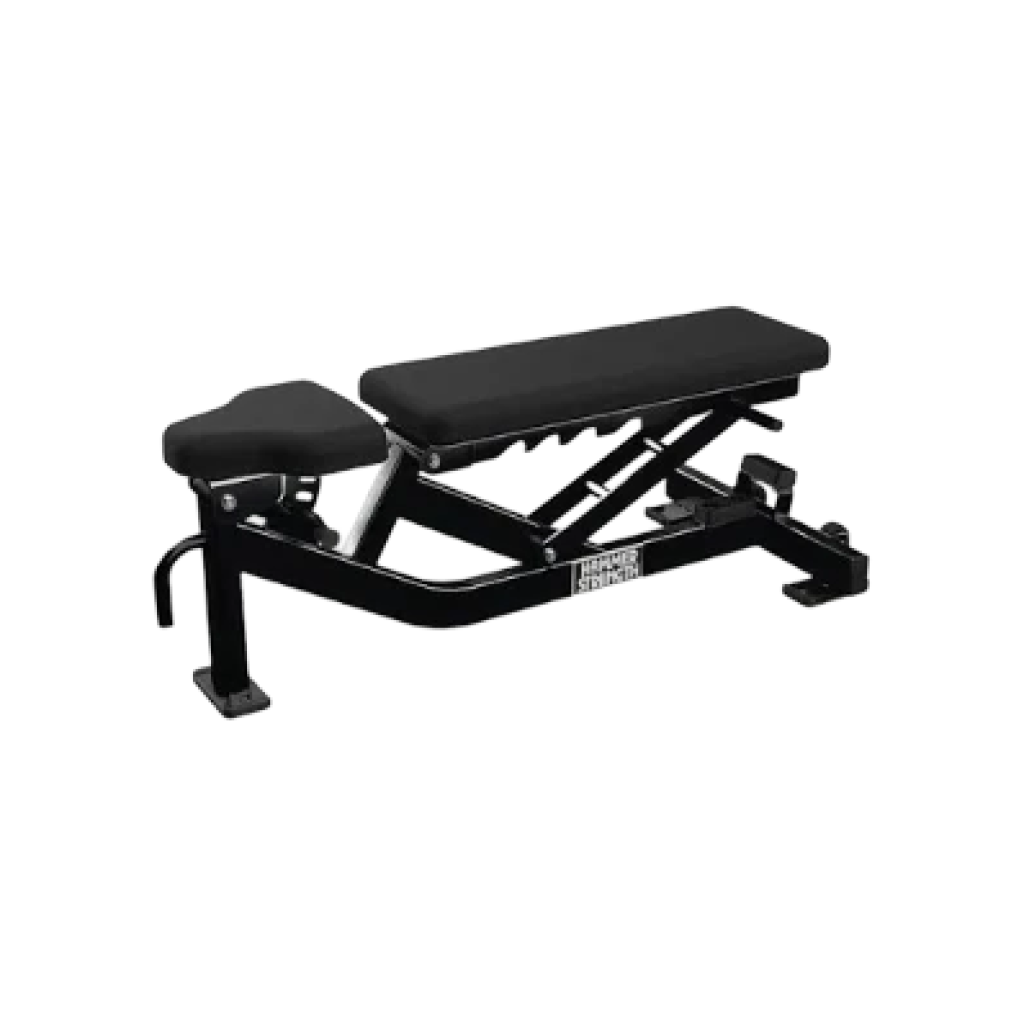
Hammer Strength Home Multi-Adjustable Bench
Price: $799.00
Description:
The Hammer Strength Home Multi-Adjustable Bench brings gym-level quality to your home workouts. With a compact yet durable frame, this bench offers multiple backrest and seat positions to support a full range of strength training exercises. Designed for performance and stability, its solid 85 lb structure supports up to 495 lb of training weight.
Featuring a matte black charcoal frame and premium black upholstery, it perfectly blends elegance with rugged strength. This bench allows for smooth transitions from decline (-10°) to incline (75°), making it versatile for any strength routine.
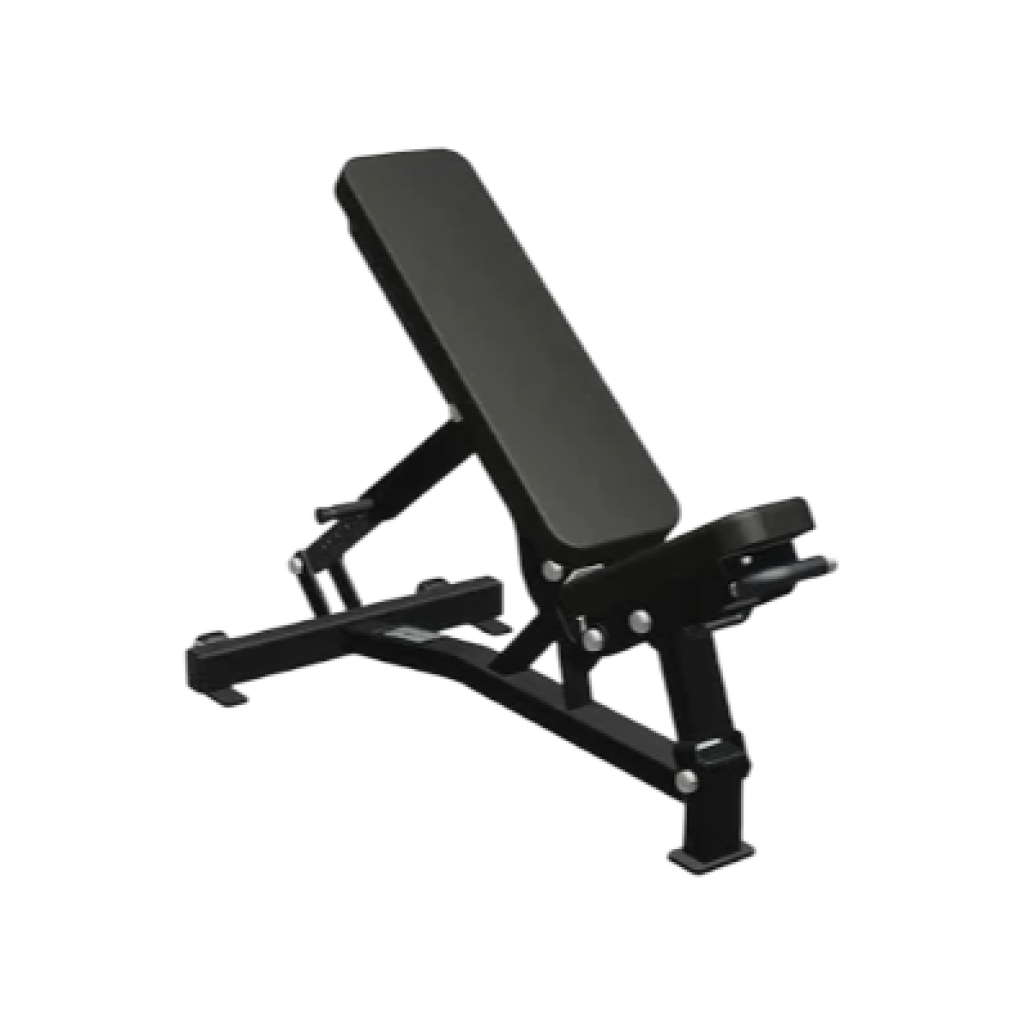
Hammer Strength Multi-Adjustable Bench
Price: $1,801.00
Description:
Engineered for commercial-grade durability, the Hammer Strength Multi-Adjustable Bench offers maximum stability and precision. Weighing 90 lbs with a max training capacity of 765 lbs, this bench supports even the most demanding strength regimens.
The charcoal matte frame and high-grade black upholstery ensure a professional aesthetic, while its 54” x 27” footprint fits seamlessly into any gym layout. Designed with a back pad dimension of 32.5” x 11.5”, it provides optimal comfort for a range of exercises.
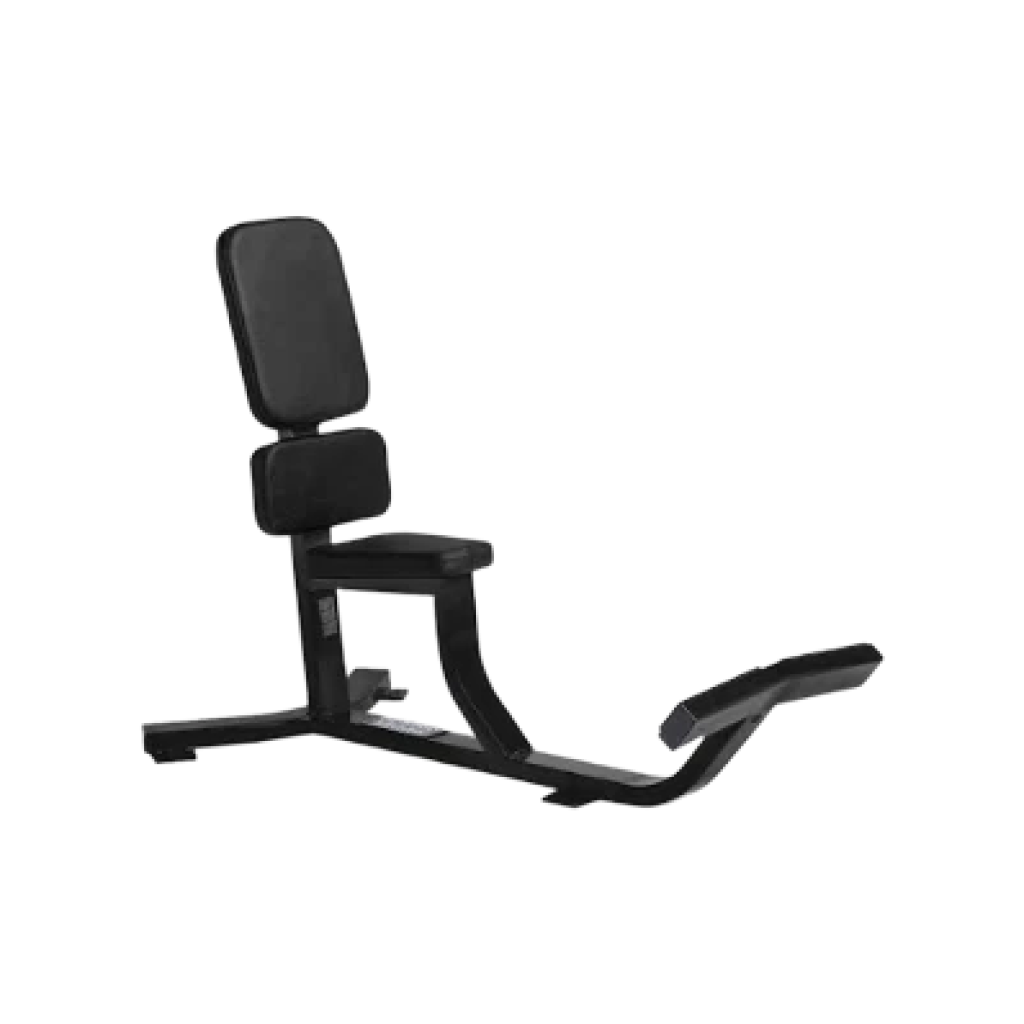
Hammer Strength Utility Bench – 75 Degree
Price: $809.00
Description:
The Hammer Strength 75° Utility Bench is a sleek, vertical-style bench perfect for dumbbell shoulder presses and seated exercises. With a 75° upright backrest, it promotes perfect posture for overhead movements while maintaining full comfort.
Compact yet powerful, it weighs 72 lbs and supports a 300 lb user weight capacity. Designed in matte black with matching upholstery, this bench delivers the ideal blend of stability and style.
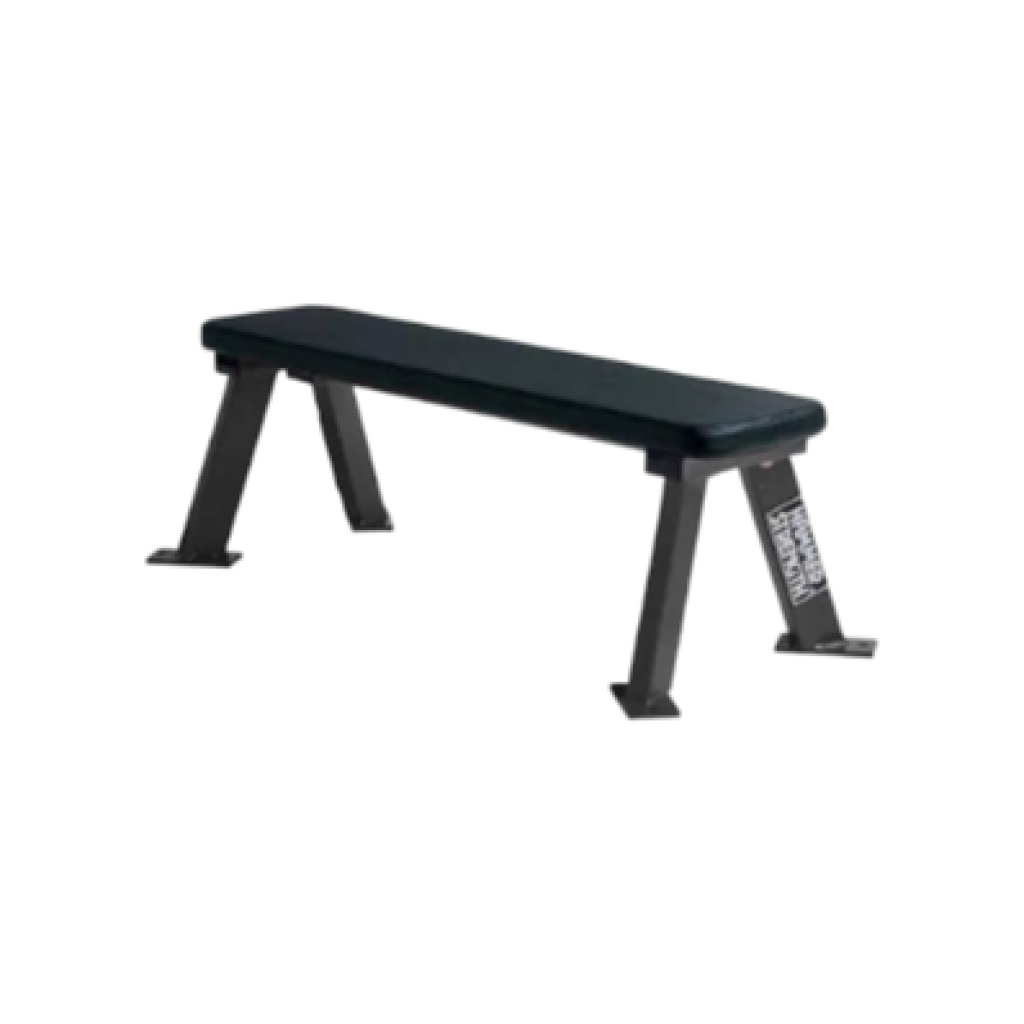
Hammer Strength Flat Bench
Price: $750.00
Description:
Simplicity meets strength in the Hammer Strength Flat Bench — the foundation for every effective workout. Designed for total stability, this bench supports a max capacity of 855 lbs, making it a staple for serious lifters.
Its compact design (50” x 19” x 16”) and 49 lb weight provide unmatched mobility without compromising strength. With a durable 48.5” x 11” pad, it offers comfort and consistency through every rep.
Target Audience
This comprehensive guide serves multiple segments of the fitness community, each with distinct needs and priorities. Gym owners and purchasing managers will find detailed information on equipment specifications, return on investment considerations, maintenance requirements, and model comparisons to inform their capital equipment decisions. For these professionals, understanding the durability, space efficiency, and member appeal of different Hammer Strength models is crucial to maximizing facility value.
Professional athletes and serious strength training enthusiasts represent another key audience. These individuals demand equipment that can support their specific training protocols, whether that’s progressive overload for hypertrophy, explosive power development, or sport-specific strength enhancement. They need to understand how different models and features can support their training goals and how to integrate this equipment into periodized training programs.
Home gym builders investing in their personal fitness infrastructure want to make informed decisions about equipment that will serve them for years or even decades. They need guidance on selecting the right model for their available space, understanding the differences between commercial and residential options, and determining which features justify premium pricing for their individual needs.
Fitness coaches and training professionals require deep technical knowledge about proper form, programming variations, safety protocols, and how to adapt exercises for clients with different abilities and limitations. Their understanding of equipment capabilities directly impacts their ability to deliver results for their clients while maintaining the highest safety standards.
Core Product Features
Design Philosophy
The foundation of Hammer Strength’s engineering philosophy rests on precise biomechanical analysis of human movement patterns. Unlike generic gym equipment that forces users to adapt their natural movement to match machine constraints, Hammer Strength designs machines around how the human body naturally moves. This approach begins with extensive motion capture studies of athletes performing free-weight exercises, analyzing joint angles, force vectors, and muscle activation patterns throughout the complete range of motion.
The resulting equipment mimics natural movement trajectories so accurately that users experience a training stimulus remarkably similar to free weights, but with enhanced safety and control. The pressing motion on a Hammer Strength bench follows an arc that naturally accommodates shoulder mechanics, rather than forcing a purely linear path that can create joint stress. This biomechanically sound design principle reduces injury risk while potentially improving strength gains by allowing users to handle heavier loads safely.
One of Hammer Strength’s most significant innovations is the independent dual-arm system found in many of their bench press models. This design allows each arm to move independently, addressing one of the most common training challenges: muscular imbalances. In traditional barbell bench press exercises, the stronger side can compensate for the weaker side, perpetuating strength asymmetries. The independent arm design ensures each side must handle its assigned load without assistance from the other, promoting balanced development and identifying weaknesses that require attention.
The ergonomic seat and backrest design reflects extensive research into optimal body positioning for force production and spinal safety. The contoured padding provides support at critical points while allowing natural scapular movement, which is essential for shoulder health during pressing movements. Adjustment mechanisms are intuitive and secure, allowing users to quickly find their optimal position and lock it in place with confidence.
Technical Specifications
The structural integrity of Hammer Strength equipment begins with commercial-grade steel framing, typically constructed from 11-gauge steel or heavier. This robust construction provides exceptional load capacity, with most models rated for 400-600 pounds of resistance or more, depending on the specific design. The heavy-gauge steel doesn’t merely support static loads—it must withstand the dynamic forces generated during explosive pressing movements without flexing or wobbling, maintaining a solid, confidence-inspiring feel even under maximum loads.
Dimensional requirements vary significantly across the product line. A typical plate-loaded Hammer Strength bench press occupies a footprint of approximately 60-70 inches in length and 50-60 inches in width, with a height of 50-55 inches. However, users must also consider clearance space for loading plates and safe entry and exit, bringing the total space requirement to roughly 10 feet by 8 feet. Selectorized models with integrated weight stacks may have different space requirements, often with a slightly larger footprint but eliminating the need for separate weight plate storage.
Weight configuration options adapt to different facility needs and user preferences. Plate-loaded models accept standard Olympic weight plates on horns designed to accommodate multiple 45-pound plates per side, offering virtually unlimited resistance potential. Selectorized models typically feature weight stacks ranging from 150 to 400 pounds, with increments of 10 or 20 pounds, providing quick weight changes ideal for circuit training or facilities where efficiency is paramount.
Adjustment capabilities are central to the equipment’s versatility. Seat height adjustments typically offer a range of 6-8 inches, ensuring users of vastly different heights can achieve proper positioning. Backrest angles may be adjustable on multi-angle models, ranging from decline positions of approximately 15 degrees below horizontal to incline positions of 30-40 degrees above horizontal. These adjustments use secure pin mechanisms or pneumatic-assisted systems that prevent accidental position changes during use.
Safety Performance
Safety features on Hammer Strength equipment reflect the company’s understanding that commercial equipment must protect users ranging from novices to elite athletes. The handles feature diamond-knurled, ergonomically shaped grips that provide secure hand placement even when palms are sweaty. Multiple grip position options allow users to find hand placements that feel natural and safe for their individual shoulder width and mobility.
The base structure demonstrates engineering that prioritizes stability. Wide-stance frames with large footprint contact patches ensure the equipment remains planted during vigorous use. Rubber feet protect flooring while preventing the equipment from sliding, even on smooth surfaces. The center of gravity is deliberately positioned to maintain stability even when heavily loaded on one side—important for the independent arm models where users might perform single-arm variations.
Built-in safety limiters prevent handles from traveling beyond safe ranges of motion, particularly important in preventing hyperextension of shoulders during the eccentric (lowering) phase. These mechanical stops are adjustable on some models, allowing customization for users with different mobility levels or those recovering from injuries who need restricted ranges of motion during rehabilitation.
The corrosion-resistant finish isn’t merely cosmetic—it’s a critical durability feature. Commercial facilities experience environments where equipment faces constant exposure to sweat, cleaning chemicals, and heavy use. Hammer Strength applies multi-stage finishing processes, including powder coating and sometimes electroplating on moving parts, creating surfaces that resist rust and wear for years of demanding use. This coating system contributes significantly to the equipment’s reputation for maintaining like-new appearance and function even after years in busy commercial environments.
Product Series and Models
Major Model Comparisons
The Hammer Strength Iso-Lateral Bench Press represents the flagship model in the line, embodying the brand’s core philosophy of independent arm movement. This plate-loaded unit features two separate loading horns, allowing users to load different weights on each side if desired for corrective work or to work each arm independently. The iso-lateral design means each arm follows its own natural arc through space, converging toward the midline at the top of the movement just as arms do during a barbell press, but allowing each side to move at its own pace and through its optimal path. This model is particularly popular in strength and conditioning facilities where coaches work with athletes on correcting imbalances or developing unilateral strength.
The Hammer Strength Select Bench Press incorporates an integrated weight stack system with a selector pin for rapid weight changes. This selectorized design proves ideal for commercial gyms where multiple users of varying strength levels use the equipment in quick succession, or for circuit training protocols where transitioning between weights must be nearly instantaneous. The weight stack typically ranges from 20 to 200 or more pounds per arm, with some models offering additional weight increments via magnetic add-on weights. While the maximum resistance may be lower than plate-loaded options, the convenience factor and reduced need for weight plate storage makes this model attractive for many facilities.
The Hammer Strength Plate-Loaded Bench provides the most straightforward design, featuring a fixed horizontal bench angle for traditional flat bench pressing. This workhorse model strips away complexity in favor of pure functionality, offering unlimited loading capacity limited only by how many plates users can fit on the horns. The simplicity translates to exceptional reliability and minimal maintenance requirements, making it a favorite for high-volume commercial facilities where equipment must work flawlessly day after day with minimal attention.
The Hammer Strength Decline/Incline Bench models expand training options by targeting different portions of the chest musculature. Decline variations emphasize the lower chest and allow for heavier loads due to improved biomechanical positioning, while incline models shift focus to the upper chest and front deltoids. Some models offer adjustable angles, while others maintain fixed positions optimized for specific training goals. These specialized angle variations enable comprehensive chest development programs and prevent training plateaus by introducing novel stimuli.
Application Scenarios for Each Model
Commercial fitness facilities typically invest in a diverse equipment selection to serve their varied membership base. A well-equipped gym might feature two or three iso-lateral plate-loaded presses for serious lifters who want maximum control and loading potential, complemented by one or two selectorized units positioned in areas designated for circuit training or where space limitations make plate storage impractical. The combination allows the facility to accommodate both the hardcore strength athlete who needs to load 405 pounds and the general member who simply wants a safe, effective chest workout with easy weight changes.
Professional training centers serving elite athletes or teams often favor plate-loaded models exclusively. The ability to load massive amounts of weight, perform single-arm variations, and closely replicate the feel of free-weight pressing makes plate-loaded equipment the preferred choice where performance enhancement is the primary goal. These facilities typically design their layout with ample space around each unit and abundant weight plate storage, as their users expect to train with serious intensity and load.
Home gym recommendations depend heavily on available space, budget, and training goals. Serious home gym builders with dedicated workout spaces and substantial budgets often select the same commercial-grade plate-loaded equipment found in professional facilities. However, for those with space or budget constraints, a selectorized unit or a single multi-angle model might better serve needs by maximizing versatility in a compact footprint. The home user who trains solo particularly benefits from the inherent safety of machine-based pressing compared to free-weight barbell work without a spotter.
Rehabilitation and physical therapy applications favor selectorized models with fine weight increments, allowing precise loading for patients progressing through recovery protocols. The guided movement pattern provides security for individuals rebuilding strength after injury, while the ability to make small weight increases—sometimes as little as five pounds—supports gradual, safe progression. Some rehabilitation facilities opt for models with limited range-of-motion settings, enabling therapists to prescribe exercises within safe movement ranges for patients with restrictions.
Training Effects and Advantages
Target Muscle Groups
The primary target of any bench press variation is the pectoralis major, the large fan-shaped muscle covering the chest. The Hammer Strength bench press provides comprehensive pectoral development through its biomechanically accurate pressing motion. The horizontal pressing movement recruits both the clavicular (upper) and sternal (lower) heads of the pectoralis major, with the precise emphasis shifting based on bench angle and individual anthropometry. The independent arm design ensures both pectorals receive equal training stimulus, preventing the common scenario where the dominant side takes over.
The anterior deltoid, forming the front cap of the shoulder, serves as a crucial synergist during the bench press movement. These shoulder muscles activate strongly during the initial drive phase of the press and maintain tension throughout the movement to stabilize the shoulder joint. The natural arc of motion programmed into Hammer Strength equipment positions the shoulders for optimal force production while minimizing impingement risk—a common concern with poorly designed pressing equipment.
Triceps brachii, the three-headed muscle group on the back of the upper arm, provides powerful elbow extension during the pressing motion. While the triceps aren’t the primary mover, they receive substantial training stimulus, particularly during the lockout phase at the top of each repetition. Users can shift emphasis toward the triceps by utilizing narrower grip positions available on most Hammer Strength models.
Perhaps less obvious but equally important is the activation of core stabilizing muscles throughout the movement. Despite the supported nature of machine pressing, the core musculature—including the rectus abdominis, obliques, and erector spinae—must engage to maintain proper body positioning and transfer force efficiently from the stable base through the pressing limbs. This stabilization requirement contributes to functional strength development beyond merely building bigger chest muscles.
Comparison with Traditional Barbell Bench Press
The safety advantages of Hammer Strength equipment versus traditional barbell pressing are substantial and immediate. The elimination of spotter requirements removes a significant barrier for solo trainers who otherwise must stop short of muscular failure to avoid being trapped under a barbell. The fixed movement path and inherent stops built into the equipment mean that even if a user reaches complete muscular failure, they can simply release the handles without risk of being pinned under hundreds of pounds of weight. This safety enhancement is particularly valuable for beginners who may not accurately judge their limits or experienced lifters training to true failure as part of advanced protocols.
The unilateral training capability addresses one of traditional barbell pressing’s fundamental limitations: bilateral compensation. On a barbell, the stronger arm inevitably assists the weaker side, allowing strength imbalances to persist or even worsen over time. The independent arms of many Hammer Strength models force each side to handle its designated load independently, immediately revealing discrepancies and ensuring balanced development. Athletes can even load different weights on each side for corrective work, something impossible with a barbell.
Shoulder joint stress reduction stems from the equipment’s ability to accommodate individual biomechanics. Barbell bench pressing forces all users to follow the same bar path regardless of their shoulder width, arm length, or natural pressing groove. Hammer Strength equipment allows slight variations in path that feel more natural to each user, reducing the cumulative joint stress from thousands of repetitions over months and years of training. The handles also offer multiple grip positions, letting users find angles that feel comfortable for their shoulder structure rather than being locked into a fixed barbell grip.
Muscle stimulation precision improves because the equipment removes many stabilization requirements. While some view this as a disadvantage compared to free weights’ demand for stabilization, the reduced stabilization requirement allows users to focus mental and physical resources entirely on maximally contracting the target muscles. This intense, focused contraction can produce superior muscle-building stimulus, particularly for hypertrophy-focused training where the goal is muscle growth rather than developing general strength or sport-specific movement patterns.
Training Versatility
Angle variations dramatically expand the training possibilities. While a flat bench emphasizes the middle chest, shifting to incline positions (typically 30-45 degrees) redirects focus toward the upper pectorals and anterior deltoids—essential for developing a complete, aesthetic physique and functional overhead strength. Decline positions (15-30 degrees below horizontal) emphasize the lower chest and allow for heavier loads due to improved biomechanical leverage, making them favorites for strength-focused training phases.
Progressive resistance programming becomes highly systematic with Hammer Strength equipment. The clear weight markings on selectorized models or the simple math of adding plate weight allows for precise tracking and incremental increases. A well-designed program might have novices adding 5-10 pounds weekly, intermediate trainees increasing monthly, and advanced athletes working in blocks where they accumulate volume at a given weight before attempting new personal records. The equipment’s consistency makes these programs reliable—the same weight feels the same every session, unlike free weights where balance and groove variations introduce session-to-session inconsistency.
Single-arm pressing variations unlock unique training applications. Athletes can perform pure single-arm sets to address specific weaknesses, alternating arm pressing to introduce a stability challenge and core rotation resistance, or even offset loading where one arm presses while the other holds a static contraction. These variations prevent adaptation, provide novel stimuli, and develop functional strength patterns relevant to sports involving unilateral pressing actions.
Advanced training techniques integrate seamlessly with Hammer Strength equipment. Drop sets become effortless with selectorized models—simply reduce the weight and continue immediately upon reaching failure. Forced repetitions work safely because training partners can provide minimal assistance at sticking points without needing to handle a loaded barbell. Eccentric emphasis training, where users focus on the lowering phase with supramaximal loads, becomes safer because the controlled machine path eliminates balance concerns present with free weights.
Usage Guidelines
Proper Setup Procedures
Seat and backrest adjustment forms the foundation of effective, safe training. Begin by sitting on the bench and grasping the handles. Your forearms should be roughly vertical at the bottom of the movement, with handles positioned at or slightly below chest level. If handles sit too high, lower the seat; if too low, raise it. Most models offer 8-12 position settings, providing fine-tuned height adjustment for users ranging from 5 feet to over 6 feet 5 inches tall. The seat adjustment mechanism typically involves pulling a pop-pin, adjusting to the desired height, and ensuring the pin fully engages in the selected position before loading any weight.
Backrest angle considerations apply to multi-angle models. Flat pressing positions the backrest horizontally; incline variations raise the backrest to angles between 15 and 45 degrees; decline positions lower it below horizontal. Each angle recruits the chest muscles differently, with steeper inclines shifting emphasis upward and decline positions emphasizing the lower chest. Select angles based on training goals and ensure the adjustment mechanism locks securely—attempting to use equipment with an unsecured backrest angle presents significant injury risk.
Proper body positioning begins with foot placement. Plant feet flat on the floor, roughly shoulder-width apart, positioned far enough back that knees form approximately 90-degree angles. This stable base enables force transfer from the ground through the legs, core, and finally into the pressing movement. Some users prefer wider or narrower stances—the key is feeling stable and able to press without the hips sliding on the seat.
Spinal positioning requires maintaining the natural curves of the spine throughout the movement. Press the upper back firmly into the backrest while maintaining a slight arch in the lower back—enough to slip a hand between lower back and pad, but not so much that the hips lift off the seat. The head should rest against the pad with neck neutral, eyes looking slightly upward toward the ceiling or straight ahead depending on comfort.
Handle selection and grip width options vary by model, but most offer 3-5 distinct grip positions ranging from narrow (hands approximately shoulder-width) to wide (hands well outside shoulder width). Wider grips emphasize the chest with reduced triceps involvement; narrower grips shift emphasis toward triceps while still working chest effectively. Medium-width grips—where forearms remain roughly vertical throughout the movement—provide a balanced muscle recruitment pattern suitable for most training purposes. Grip the handles firmly with wrists straight, avoiding excessive extension or flexion that can cause wrist strain.
Breathing coordination dramatically impacts performance and safety. Inhale during the eccentric (lowering) phase as handles move toward the chest. This breath creates intra-abdominal pressure that stabilizes the spine and core, essentially turning the torso into a rigid column for force transfer. Hold this breath momentarily at the bottom position, then exhale during the concentric (pressing) phase as handles move away from the chest. Never hold breath for multiple repetitions, as this can cause dangerous blood pressure spikes and dizziness.
Common Training Movements
The standard flat bench press serves as the foundational exercise in most chest training programs. Execute by adjusting the seat so handles align with mid-to-lower chest at the bottom position. Begin with handles at chest level, press upward and slightly inward following the natural arc dictated by the equipment, achieving full elbow extension at the top without locking out so forcefully that elbow joint stress results. Lower with control, allowing handles to return to the starting position where a slight stretch sensation should be felt across the chest. Typical tempo recommendations include 1-2 seconds for the concentric phase, a brief pause at the top, 2-3 seconds for the eccentric phase, and a momentary pause at the bottom before beginning the next repetition.
Incline pressing for upper chest development requires adjusting the backrest to an inclined position, typically 30-45 degrees above horizontal. The steeper the incline, the more emphasis shifts toward anterior deltoids and away from chest, so most lifters find 30-degree angles optimal for maintaining chest focus while targeting the upper pectoral region. Setup, breathing, and tempo mirror flat pressing, though many users find they can handle approximately 20-30% less weight on incline variations due to the less mechanically advantageous position.
Decline pressing emphasizes the lower chest and allows for the heaviest loads due to improved leverage. Set the backrest to a declined position, typically 15-30 degrees below horizontal. Some users report difficulty maintaining position on decline benches—if your facility’s Hammer Strength model includes leg restraints or thigh pads, use them to prevent sliding. The pressing motion remains the same, though the angle change shifts the peak muscle activation point toward the lower pectoral region.
Grip width variations introduce training diversity without equipment changes. Narrow grip pressing positions hands roughly shoulder-width apart or slightly inside shoulder width, emphasizing triceps and inner chest. Wide grip variations position hands well outside shoulder width, emphasizing the outer chest and reducing triceps contribution. Most training programs incorporate various grip widths throughout the weekly or monthly training cycle to ensure comprehensive development of all muscle regions.
Training Program Recommendations
Beginner programs emphasize technical mastery and gradual strength development. A novice might perform bench press twice weekly, with 48-72 hours recovery between sessions, completing 3 sets of 8-12 repetitions at moderate weights allowing 2-3 repetitions to remain “in reserve” at the end of each set. The focus should be perfecting form, understanding body positioning, and developing the mind-muscle connection rather than loading maximum weights. Progressive overload occurs by adding 5-10 pounds once all sets reach 12 repetitions with good form, then reducing back to 8 repetitions per set at the new weight and building back up.
Intermediate programming introduces greater complexity and volume. A lifter with 6-18 months of consistent training experience might press 2-3 times weekly, incorporating different angles or variations in each session. Monday might feature heavy flat pressing (4 sets of 6-8 reps at challenging weights), Wednesday might include moderate incline pressing (3 sets of 10-12 reps), and Friday could incorporate lighter decline pressing or single-arm variations (3 sets of 12-15 reps per arm). This variation prevents adaptation while accumulating substantial training volume across different movement patterns and intensity zones.
Advanced strength development programs for experienced lifters or athletes often incorporate periodized approaches where training variables systematically change over weeks or months. A 12-week strength cycle might begin with higher volume work (4-5 sets of 8-12 repetitions at 70-75% of maximum), progress through a strength-building phase (4-6 sets of 4-6 repetitions at 80-85% of maximum), and culminate in a peak phase (3-4 sets of 1-3 repetitions at 90-95% maximum) before deloading and starting a new cycle. This systematic approach optimizes strength gains while managing fatigue and reducing injury risk.
Training frequency and volume guidelines depend heavily on individual recovery capacity, training experience, and overall program design. Most individuals respond well to chest training 2-3 times weekly with at least one rest day between sessions for the same muscle group. Total weekly volume recommendations typically range from 10-20 sets for beginners, 15-25 sets for intermediate lifters, and 20-35+ sets for advanced athletes, though these figures represent general guidelines rather than rigid rules. Recovery factors including sleep quality, nutrition, stress levels, and training for other muscle groups all influence optimal training frequency and volume.
Safety Considerations and Injury Prevention
Warm-up protocols prove essential for injury prevention and performance optimization. Begin every pressing session with 5-10 minutes of general cardiovascular activity to increase core body temperature and elevate heart rate, followed by dynamic stretching targeting the shoulders, chest, and triceps. Progress to specific warm-up sets on the Hammer Strength equipment itself, starting with just the handles (no added resistance) for 10-15 repetitions to rehearse movement patterns and further warm target tissues. Add small amounts of weight progressively, performing sets of 8-10, 6-8, and 4-6 repetitions at approximately 40%, 60%, and 80% of your working weight before beginning actual training sets.
Load selection principles prevent both undertraining and injury risk. For hypertrophy-focused training, select weights allowing 8-12 controlled repetitions with 1-3 repetitions remaining possible at the end of the set. Strength development requires heavier loads—weights allowing 3-6 repetitions with maximal effort. Never sacrifice form to lift heavier weights; adding 10 pounds with compromised technique provides less muscle stimulus than using appropriate weight with perfect execution. When unsure, err toward lighter loads, especially when learning new exercises or returning from training breaks.
Common technical errors and corrections include: allowing shoulders to shrug upward during pressing (correction: actively depress shoulders by engaging lats), excessive lower back arching lifting hips off the seat (correction: maintain core tension and foot pressure without hyperextending the spine), bouncing weights at the bottom (correction: control the eccentric phase and pause briefly before pressing), incomplete range of motion (correction: ensure handles descend to create a slight stretch before pressing), and asymmetric pressing where one arm finishes before the other (correction: deliberately synchronize arm movement or perform single-arm work to identify and address imbalances).
Injury prevention extends beyond exercise execution to include program design considerations. Avoid excessive training volume or frequency that doesn’t allow adequate recovery. Monitor for warning signs including persistent joint pain (particularly shoulders or elbows), decreased performance despite adequate recovery, or unusual muscle soreness lasting more than 72 hours. Incorporate deload weeks every 4-6 weeks where training volume or intensity reduces by 40-50% to facilitate complete recovery. If pain persists despite rest and conservative management, consult qualified healthcare professionals before resuming training.
Maintenance and Care
Daily Maintenance Protocols
Cleaning and sanitation routines protect both equipment longevity and user health. After each training session, wipe down all contact surfaces including handles, seats, and backrests using appropriate disinfectant cleaners. Commercial facilities should implement protocols ensuring equipment receives cleaning between every user, not merely at day’s end. Use disinfectants compatible with equipment finishes—many harsh cleaners containing bleach or ammonia can damage powder coating or vinyl upholstery over time. Microfiber cloths work effectively for cleaning while avoiding scratches that might mar smooth surfaces.
Moving parts lubrication prevents premature wear and maintains smooth operation. Depending on usage intensity, apply appropriate lubricant to pivot points, guide rods, and other moving components monthly for heavy commercial use or quarterly for moderate home use. Consult the manufacturer’s maintenance guidelines for recommended lubricant types—some components require dry lubricants while others perform best with light oils. Avoid over-lubrication, which attracts dust and debris, potentially causing more harm than benefit.
Fastener inspection and tightening prevents dangerous equipment failures. Vibration from repeated use gradually loosens bolts and fasteners even on the highest quality equipment. Implement weekly or bi-weekly checks of all visible fasteners, including frame connection points, seat adjustment mechanisms, handle attachment points, and weight stack connectors on selectorized models. Use appropriate tools—typically Allen keys or socket wrenches—to ensure secure tightening without over-torquing that might strip threads or damage components.
Upholstery and grip wear assessment catches replacement needs before complete failure. Inspect seat and backrest padding weekly for tears, excessive compression, or areas where underlying structure becomes palpable through the padding. Check handles for worn grip texture, cracks, or loosening. Addressing these wear items proactively prevents the deterioration from affecting user experience or safety. Most components remain serviceable for years with proper care, but commercial facilities with hundreds of daily users may require more frequent replacement.
Scheduled Maintenance Procedures
Cable and pulley system maintenance applies primarily to selectorized models but represents critical safety and performance considerations for these units. Inspect cables monthly for fraying, kinking, or other damage, particularly at termination points where cables attach to weight stacks and handles—these high-stress areas fail first. Check pulley wheels for smooth rotation, unusual noise, or excessive play indicating bearing wear. Replace cables at the first sign of damage rather than risking sudden failure during use. Most manufacturers recommend replacing cables preventively every 2-3 years in high-volume commercial environments regardless of apparent condition.
Weight stack calibration ensures accurate loading and identifies mechanical issues. Verify that selector pin engagement securely captures the selected weight without resistance from misaligned plates. Check that weights move smoothly through their full range without binding, indicating proper guide rod alignment and adequate lubrication. Commercial facilities might periodically verify actual weight accuracy using calibrated scales, as repeated impacts can compress rubber bumpers causing incremental weight increases over time.
Structural frame inspection catches potentially serious issues early. Examine welds and frame joints for cracks, looking particularly at high-stress areas where components connect. Check that the frame maintains square geometry without twisting or racking. Listen for unusual sounds during use that might indicate loose connections or internal component issues. Document any concerning findings and address them immediately—structural integrity forms the foundation of equipment safety.
Professional service engagement proves valuable even for well-maintained equipment. Annual or bi-annual professional inspections by manufacturer-certified technicians identify issues that might escape routine checks, ensuring equipment remains in optimal condition. These professionals possess specialized knowledge, diagnostic tools, and access to proprietary maintenance procedures. Many facilities find professional maintenance agreements cost-effective compared to reactive repairs and the potential liability of equipment failures.
Longevity and Warranty
Expected lifespan for Hammer Strength equipment under normal commercial use typically exceeds 10-15 years, with many units remaining serviceable for 20+ years when properly maintained. Home users experiencing far lower utilization can expect equipment to remain in excellent condition essentially indefinitely. The steel frames themselves rarely fail—instead, wear items like upholstery, cables, and bushings eventually require replacement, though this constitutes normal maintenance rather than equipment failure.
Warranty coverage varies by model and whether equipment is purchased for commercial or residential use, but typical manufacturer warranties include lifetime coverage on frame structure, 3-5 years on moving parts, and 1-2 years on upholstery and wear items. Commercial warranties typically offer shorter coverage periods reflecting the intense use these facilities deliver. Extended warranty options often become available at purchase time for buyers wanting additional protection beyond standard coverage.
Parts replacement and service availability represent crucial long-term considerations. Hammer Strength’s position as an established, major brand under the Life Fitness umbrella provides confidence that parts availability will continue indefinitely. Replacement components including seats, handles, cables, pulleys, and hardware typically ship quickly from central warehouses. Many parts maintain compatibility across multiple model generations, further easing long-term serviceability concerns.
Extended warranty programs offer peace of mind particularly for commercial buyers making substantial equipment investments. These programs might extend coverage periods, include preventive maintenance visits, or provide reduced pricing on parts and service. When evaluating extended warranties, compare the additional cost against likely out-of-pocket expenses for repairs and factor in the administrative convenience of having warranty coverage resolve issues without per-incident charges or negotiations.
Purchasing Guide
Price Ranges and Considerations
Different model price ranges reflect the diverse product line spanning entry-level home units to top-tier commercial equipment. Plate-loaded models typically start around $2,000-3,000 for basic home-use versions, rising to $4,000-6,000+ for commercial-grade units with premium features. Selectorized models command higher prices due to their integrated weight stacks and more complex mechanisms, generally ranging from $4,000-7,000 depending on weight stack capacity and features. Multi-angle adjustable models occupying the premium end of the spectrum might exceed $8,000-10,000, reflecting their versatility and sophisticated engineering.
Commercial versus residential comparisons reveal significant differences beyond price. Commercial-rated equipment uses heavier-gauge steel, higher-capacity bearings, more durable upholstery, and often includes features like transportation wheels and integrated storage that enhance facility management. Commercial warranties typically provide shorter coverage periods but include provisions for high-volume use environments. Residential units may use slightly lighter materials and carry longer warranties but explicitly void coverage if equipment enters commercial service. For serious home gym builders, purchasing commercial-grade equipment often proves wise despite higher initial costs, as the superior durability and performance justify the investment.
New equipment versus refurbished options presents an important value decision. Refurbished Hammer Strength equipment—professionally restored units removed from commercial facilities—can provide 30-50% savings compared to new pricing. Reputable refurbishers replace worn upholstery, inspect and rebuild mechanical components, refinish frames, and typically offer limited warranties. Risks include unknown usage history, potential hidden wear, and shorter remaining service life compared to new equipment. Buyers considering refurbished units should purchase only from established refurbishers offering warranties and insist on detailed documentation of restoration procedures.
Value analysis extends beyond purchase price to consider total ownership costs. More expensive selectorized models offer convenience and space efficiency that might justify premium pricing for busy commercial facilities or home users with limited space. Plate-loaded models require purchasing weight plates separately (typically $1-2 per pound), but offer unlimited loading capacity and lower maintenance costs due to simpler mechanisms. Factor in expected lifespan, maintenance costs, warranty coverage, and resale value when evaluating equipment value rather than focusing solely on purchase price.
Purchasing Channels
Official authorized dealer networks provide the most secure purchasing path. Authorized dealers maintain relationships with manufacturers ensuring genuine equipment, valid warranties, and access to parts and service. These dealers often provide floor models for testing, expert consultation matching equipment to specific needs, and post-purchase support. Pricing through authorized dealers typically remains consistent based on manufacturer guidelines, though dealers may offer flexibility on delivery and installation costs or bundle deals when purchasing multiple pieces.
Online purchasing platforms including manufacturer direct websites, major fitness equipment retailers, and marketplaces like Amazon expand options for comparing prices and features. Online purchases often provide lower prices due to reduced overhead, but may sacrifice personal service and pre-purchase equipment testing. Ensure online sellers are authorized dealers to avoid warranty complications. Carefully review shipping costs—Hammer Strength equipment’s substantial weight creates shipping expenses often exceeding several hundred dollars, potentially erasing apparent price advantages.
Physical retail stores including specialty fitness equipment showrooms and sporting goods retailers offer hands-on evaluation before purchase. Testing equipment personally reveals subjective factors like how natural the motion feels, whether adjustments accommodate your proportions, and whether handles and seats feel comfortable. Many buyers find this experience invaluable for significant investments. Physical stores may offer immediate availability for in-stock items and local delivery, versus potentially lengthy shipping times for online orders or units requiring manufacture.
Secondary market considerations tempt budget-conscious buyers, with used Hammer Strength equipment available through sites like Craigslist, Facebook Marketplace, and specialized used fitness equipment dealers. Pricing varies dramatically based on condition and local supply, but savings of 50-70% versus new pricing are common. Inspect used equipment thoroughly examining frames for cracks or rust, moving parts for excessive wear, upholstery for tears, and function testing all adjustments and weight stack operation if applicable. Absent warranty coverage, factor repair costs into purchase decisions. Transport logistics for heavy equipment often require renting trucks or hiring movers, adding costs that may erode apparent savings.
Selection Considerations
Usage frequency evaluation guides appropriate equipment choices. Home users training 3-4 days weekly might favor a single multi-angle model providing training variety without requiring multiple pieces. Commercial facilities experiencing dozens or hundreds of daily uses need multiple dedicated units to prevent bottlenecks and reduce wear concentration. Higher usage intensity justifies investing in more durable commercial-grade equipment despite premium pricing, as the per-use cost decreases with higher utilization.
Space dimensions and layout planning prevents purchasing equipment that doesn’t physically fit. Measure available space carefully including length, width, and ceiling height, accounting for both the equipment footprint and necessary clearance for safe entry, exit, and exercise performance. Consider traffic flow patterns—equipment positioned too close to walls or other equipment creates access difficulties and safety hazards. Sketch or digitally plan layouts before purchasing, ensuring adequate space remains for future additions to your facility or home gym.
Budget determination requires honest financial assessment. Establish maximum comfortable spending levels including equipment, shipping, installation, and initial accessory purchases like additional weight plates. Consider financing options many dealers offer—while adding interest costs, financing spreads expenses over time making premium equipment accessible. Avoid budget strain that prevents completing your planned gym setup or forces compromising on quality that affects long-term satisfaction and equipment lifespan.
Feature priority ranking helps navigate options offering various capabilities at different price points. List desired features including independent arms, multiple grip positions, adjustable angles, weight stack capacity, and specific dimensions. Rank these by importance to your specific training needs and goals. This clarity prevents feature creep during shopping while ensuring equipment you ultimately purchase aligns with actual requirements rather than impulse preferences in the showroom.
Delivery and Installation
Shipping methods and associated costs vary substantially based on equipment size and destination distance. Standard freight shipping typically costs $200-500 for residential delivery, with commercial deliveries potentially including liftgate service if loading dock access isn’t available. White glove delivery services including inside placement and debris removal add $100-300 but prove valuable for large, heavy equipment. Clarify exactly what shipping includes—many budget shipping rates cover only curbside delivery requiring buyers to handle equipment transport into the building and final positioning.
Professional installation services ensure proper assembly and function while protecting warranty coverage. Many manufacturers require professional installation for warranty validity, particularly for complex selectorized models. Installation costs typically range from $150-400 depending on equipment complexity. Professional installers possess appropriate tools, experience, and knowledge of proper assembly procedures, completing installations in 1-2 hours that might consume half a day for inexperienced individuals. The modest cost typically justifies the convenience and peace of mind.
Self-installation guidance serves capable individuals preferring hands-on equipment assembly. Review assembly instructions thoroughly before beginning, ensuring you possess necessary tools typically including Allen keys, socket wrenches, and screwdrivers. Recruit assistance for lifting and positioning heavy components—most Hammer Strength equipment should not be assembled solo given component weights exceeding 50-100 pounds. Budget 3-5 hours for first-time assembly of typical models. Take photographs before final tightening in case reassembly proves necessary to correct errors.
Site preparation requirements prevent installation complications. Ensure flooring can support equipment weight—most residential flooring easily handles Hammer Strength equipment, but concentrated weight on weak floor structures might require reinforcement. Consider rubber flooring or mats beneath equipment to protect underlying floors and reduce noise transmission. Verify adequate electrical outlets for facilities installing numerous selectorized models. Clear the installation area completely before delivery, as installers typically won’t move existing furniture or equipment to accommodate new additions.
User Reviews and Case Studies
Professional Athlete Feedback
Professional bodybuilding athletes consistently praise Hammer Strength bench press equipment for its contribution to their chest development and competitive success. Multiple Mr. Olympia competitors have cited Hammer Strength equipment in their training programs, valuing the ability to train to muscular failure safely without spotter assistance and the consistent resistance curve that maintains tension throughout the movement range. The independent arm design receives particular appreciation for its role in correcting minor asymmetries that become glaring flaws in competitive physique presentation. Many elite bodybuilders incorporate both free-weight barbell pressing for overall strength development and Hammer Strength pressing for targeted muscle-building work, viewing them as complementary rather than competing approaches.
Powerlifting and strength sport athletes offer nuanced perspectives recognizing that while their competition involves barbell lifts, Hammer Strength equipment provides valuable assistance work. Pressing variations on Hammer Strength machines allow training around injuries that might prevent heavy barbell work while maintaining pressing strength. The reduced stabilization requirements let lifters accumulate high training volumes without the neurological fatigue that extensive heavy barbell work creates, supporting overall program recovery management. Single-arm work helps identify and address bilateral strength discrepancies that might contribute to failed lift attempts or inefficient competition technique.
Professional sports teams including NFL, NBA, and international soccer clubs integrate Hammer Strength pressing into strength and conditioning programs. Team strength coaches value the equipment’s safety for unsupervised training and its ability to accommodate athletes of vastly different sizes and strength levels efficiently. The durability proves crucial in environments where dozens of elite athletes train daily under intense supervision. Team facilities often feature multiple Hammer Strength benches at various angles, enabling circuit training protocols where athletes rotate through stations targeting different pressing angles within single sessions.
Facility Owner Perspectives
Return on investment analysis from commercial gym owners demonstrates Hammer Strength equipment’s value proposition for fitness businesses. Initial costs substantially exceed budget alternatives, but lower maintenance requirements, minimal downtime, and exceptional longevity create favorable total ownership costs. More significantly, premium equipment serves marketing and member retention functions—serious lifters specifically seek facilities offering high-end equipment, and the Hammer Strength brand signals a facility’s commitment to quality that appeals to discerning clientele willing to pay premium membership fees. Several gym owners reported that Hammer Strength equipment on their website and in facility tours helped close new membership sales, making these pieces revenue generators beyond their direct training function.
Member utilization metrics show bench press stations rank among the highest-use equipment in typical commercial facilities. Hammer Strength benches often see continuous use during peak hours, validating decisions to stock multiple units at various angles. The variety prevents member boredom and accommodates different training philosophies—beginners feel confident on these machines while advanced lifters appreciate capabilities supporting serious training. Some facilities implement booking systems for equipment during peak hours due to demand, though most prefer purchasing adequate quantities to eliminate wait times that drive member dissatisfaction.
Durability experiences from established facilities provide real-world validation of manufacturers’ longevity claims. Multiple facility managers reported Hammer Strength benches approaching or exceeding 15 years of daily commercial service while requiring only routine maintenance and occasional upholstery replacement. This longevity contrasts sharply with budget equipment frequently requiring replacement within 5-7 years, revealing the premium equipment’s superior value across extended ownership periods. The ability to refurbish rather than replace aging equipment further extends service life economically.
Customer service satisfaction regarding manufacturer support weighs heavily in repurchase decisions. Facility owners consistently praised Hammer Strength/Life Fitness support responsiveness for warranty claims, parts ordering, and technical assistance. The availability of service technicians in most metropolitan areas provides rapid response when problems arise. Several owners mentioned that even equipment beyond warranty received reasonable service cost estimates and quick resolution, building confidence for future purchases.
Individual User Experiences
Home gym builders share enthusiasm for how Hammer Strength equipment elevates their personal training spaces into professional-caliber facilities. Many report that installing this equipment increased training consistency because the quality and feel motivated regular use—the investment itself became incentive not to skip workouts. The commercial-grade construction means home users never wonder whether equipment will support their training intensity, eliminating the nagging concerns that consumer-grade equipment sometimes creates. Several users mentioned that friends and family visiting their home gyms expressed surprise at the professional quality, validating decisions to invest substantially in premium equipment.
Training outcome comparisons reveal measurable improvements users attribute to switching to Hammer Strength from other equipment or free weights alone. Common themes include increased pressing strength, improved muscle development particularly in lagging areas like upper chest, reduced shoulder discomfort that previously plagued their training, and newfound ability to train intensely without requiring training partners for safety. While numerous variables affect training results, the consistent pattern of positive feedback suggests the equipment genuinely contributes to improved outcomes beyond placebo effects.
Long-term satisfaction tracking shows remarkably high retention—few users who invest in Hammer Strength equipment regret their purchases even years later. The most common feedback theme involves wishing they had invested sooner rather than cycling through inferior equipment first. Several users calculated that the higher upfront investment would have cost less than the accumulated expense of replacing cheaper equipment multiple times while providing superior training experiences throughout. This long-term satisfaction explains the robust secondary market for used Hammer Strength equipment, where well-maintained units retain substantial resale value.
Improvement suggestions from the user community remain relatively sparse, suggesting high baseline satisfaction. Feedback that does emerge often relates to customization desires for specific body proportions or training goals—taller users sometimes wish for greater adjustment ranges, while some prefer additional grip position options. A few users suggested aesthetic refinements like more color options or integrated accessory storage. Notably absent is criticism of core functionality, durability, or safety, indicating these fundamental aspects meet or exceed expectations consistently.
Frequently Asked Questions
Usage-Related Questions
Can beginners safely use Hammer Strength bench press equipment? Absolutely—the equipment’s guided motion path and built-in safety features make it arguably safer than free-weight alternatives for novices. However, beginners should start with conservative weights, focus on perfect form, and consider initial sessions with qualified trainer supervision to establish proper technique. The equipment doesn’t require prior strength training experience, though learning fundamental movement patterns and understanding progressive overload principles enhances results regardless of equipment choice.
What are the maximum weight capacities? Capacity varies by model, but commercial-grade plate-loaded Hammer Strength benches typically accommodate 400-600+ pounds of plate loading per arm before reaching functional maximums based on weight horn capacity. Selectorized models generally max out between 150-400 pounds per arm depending on weight stack configuration. Frame structures support substantially higher loads than practical training would ever require—strength-rated for forces exceeding equipment’s functional loading capacity by comfortable margins ensures structure never represents the limiting safety factor.
Is a spotter necessary when using this equipment? One of Hammer Strength equipment’s primary advantages is eliminating spotter requirements for most training situations. The fixed movement path and mechanical stops prevent users from being pinned under weight even if they reach complete muscular failure. However, spotters still provide value for advanced techniques like forced repetitions where partners assist past failure points, and some users prefer the motivational aspect of training with partners even when safety doesn’t require it.
How do you adjust seat height, and what’s the correct setting? Adjustment mechanisms vary by model but typically involve pulling a pop-pin or releasing a lever, moving the seat to the desired height, and re-engaging the locking mechanism. The correct height positions handles at or slightly below chest level when seated with back against the pad, resulting in roughly vertical forearms at the movement’s bottom position. If handles sit too high or low at this point, adjust seat accordingly. Most users find their optimal setting through trial and error during warmup sets.
Purchase-Related Questions
What warranty coverage comes standard with Hammer Strength equipment? Typical manufacturer warranties include lifetime coverage on structural frames, 3-5 years on mechanical components like pulleys and bearings, and 1-2 years on upholstery and wear items. Commercial-use warranties often provide shorter coverage periods than residential warranties reflecting expected usage intensity differences. Always review specific warranty terms with your dealer as coverage may vary by model, purchase date, and intended use classification.
Does purchase price include delivery and installation? Standard purchase prices typically cover equipment only, with delivery and installation available as separate line items. Budget freight delivery might cost $200-500, while white glove delivery with inside placement adds $100-300. Professional installation typically costs $150-400 depending on equipment complexity. Some dealers bundle delivery and installation into package deals, particularly for multiple equipment purchases. Clarify all costs during the purchase negotiation to avoid surprises.
Are financing and payment plan options available? Most authorized dealers offer financing arrangements allowing buyers to spread payments over 12-60 month terms depending on creditworthiness and purchase amount. Commercial buyers may access equipment leasing programs providing tax advantages beyond traditional financing. Interest rates vary based on credit profiles and current market conditions, but competitive rates often make financing attractive versus paying cash upfront. Home buyers might also consider home equity loans or lines of credit offering potentially better terms than dealer financing, though requiring more initiative to arrange.
What are equipment return and exchange policies? Policies vary substantially between dealers, but typical arrangements allow returns within 30-90 days of purchase with restocking fees often 15-25% of purchase price to cover transportation and refurbishing costs. Equipment showing use or damage may face additional fees or return rejection. Some dealers offer satisfaction guarantees with more generous return terms, while others sell equipment as final sale once delivered. Clarify return policies before purchase, particularly for expensive equipment where dissatisfaction represents significant financial consequences.
Maintenance-Related Questions
What maintenance frequency does Hammer Strength equipment require? Daily maintenance involves simply wiping down contact surfaces with appropriate disinfectants after use. Weekly tasks include checking fastener tightness and inspecting upholstery for damage. Monthly maintenance should add lubrication of moving parts and cable inspection on selectorized models. Annual or bi-annual professional inspections ensure long-term reliability. Home users with lower utilization might extend maintenance intervals proportionally—quarterly rather than monthly lubrication, for example—while commercial facilities might shorten intervals during high-usage periods.
How should owners address common problems? Many common issues prove solvable with basic troubleshooting: squeaking noises usually indicate insufficient lubrication; resistance feeling inconsistent suggests checking for weight stack binding or cable wear; adjustments not holding position indicate pin mechanisms requiring cleaning or replacement. Consult user manuals for troubleshooting guidance specific to your model. Address problems promptly before they worsen—a frayed cable costs far less to replace than repairing damage that frayed cable causes by breaking during use. When unsure, contact dealer service departments rather than attempting repairs beyond your expertise.
Where can owners purchase replacement parts? Replacement components are available through multiple channels: authorized dealers maintain parts inventories or can order from manufacturer warehouses; Life Fitness’s customer service directly sells parts to end users; third-party fitness equipment parts suppliers stock common components often at competitive prices. When ordering parts, provide equipment model and serial numbers ensuring you receive correct components. Many parts remain interchangeable across model years or similar equipment, but verify compatibility before ordering to avoid return hassles.
Can owners perform maintenance and repairs independently? Many routine maintenance tasks require no special expertise—cleaning, tightening fasteners, and applying lubricants fall within most owners’ capabilities. Upholstery replacement typically involves removing fasteners and stapling new covering over foam padding using heavy-duty staplers. Cable replacement requires more care ensuring proper routing and tension but remains feasible for mechanically inclined individuals. Complex repairs involving welding, pulley replacement, or structural issues warrant professional service preventing expensive mistakes or safety hazards. Warranty coverage may require professional service for certain repairs, so review terms before attempting work that might void coverage.